Solar panel grants and government funding: What’s available and how to apply

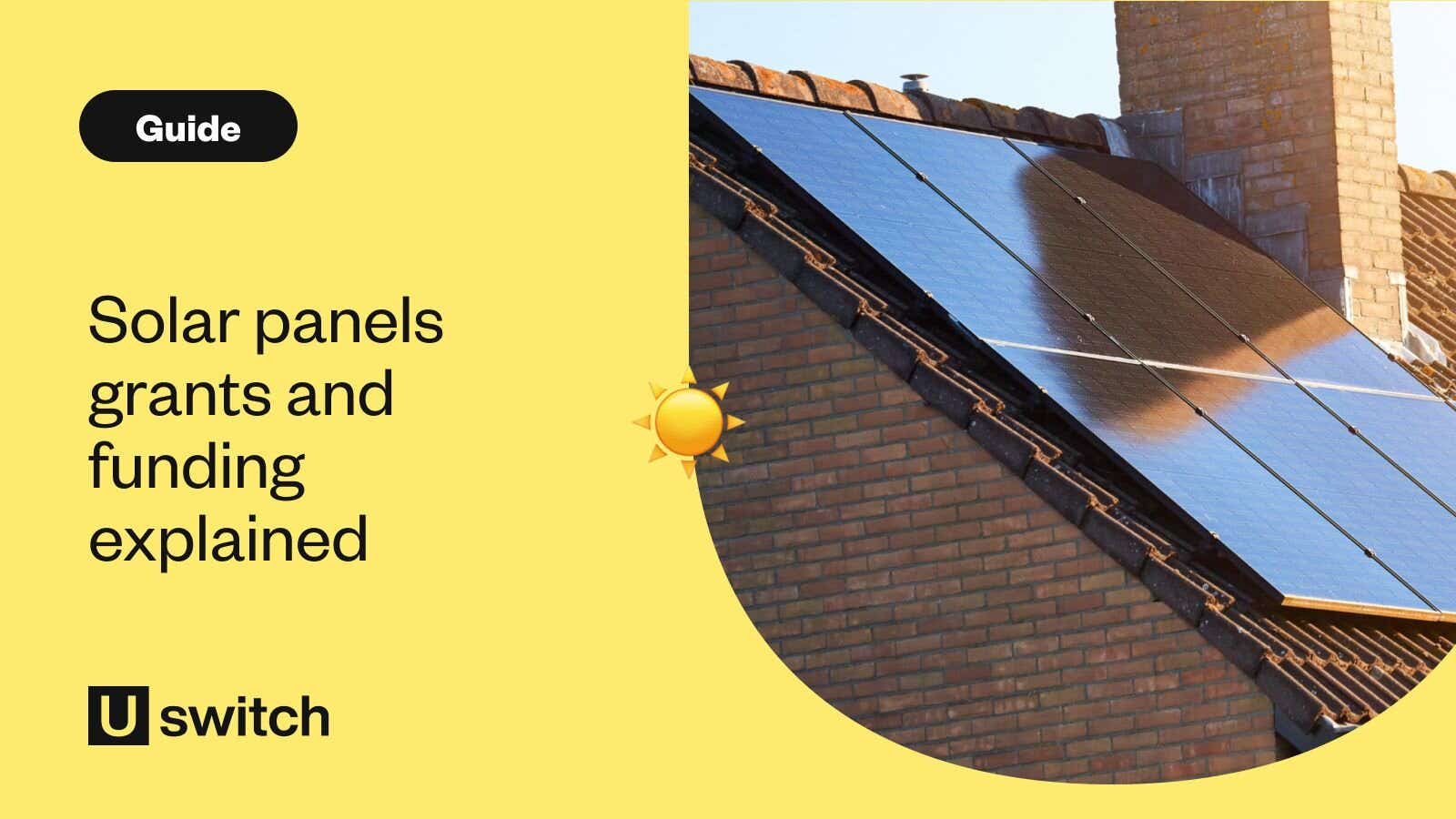
Free solar panels are rare for high earners. However, eligible low-income households can often access full funding through the ECO4 (until the end of 2026), Warm Homes: Local Grant, and other schemes.
All homeowners can pay 0% VAT on solar panels right now. New low-interest loans are coming soon that anyone can apply for, with interest-free options available for lower-income households.
It’s a great time to consider whether solar panels are right for you. Find out everything you need to know below.
What solar panel grants and funding are available in the UK?

If you’re hoping to reduce your energy bills, you might be looking at free solar panels. While solar panel grants aren’t available to everyone in the UK, there are some incentives open to all households. Government funding is split into two categories:
- Solar energy grants: Government funding for eligible low-income or vulnerable households. With free solar panels available to some.
- Incentives: VAT breaks are currently available to all UK households.
- Loans: New low-interest loans coming soon, with interest-free options for eligible lower-income households. Unlike grants, these are repayable.
Compare solar panel quotes
Even if you aren't eligible for solar panel grants and funding, they are a smart energy choice. Compare solar panel quotes now.
Solar energy grants in the UK: Your main options
| Scheme | Benefit | Eligibility | Timings |
|---|---|---|---|
| Warm Homes: Local Grant | Grants of up to £15,000. The primary route to free solar panels for eligible households | Eligible households with an income under £36k. Living in private accommodation (owned or rented) with an EPC of D-G. England-only. Equivalent schemes available in Scotland, Wales and Northern Ireland. | Available now. Ends March 2028. |
| ECO4 | Up to 100% funding. | Eligible households on certain benefits, in a home with an EPC rating of D to G. You must own your home or have your landlord's permission. Others at risk of fuel poverty may be eligible via LA Flex. | Ends 31 December 2026. |
| 0% VAT | 20% cost reduction by saving on VAT. | All UK homeowners. | Available now. Ends 31 March 2027. |
| Consumer Loan Scheme | Government-backed low-interest loans to cover upfront costs. | All homeowners. | Loan scheme expected to launch in 2027. |
Warm Homes Plan
Announced this year, the Warm Homes Plan is the government’s overarching £15bn "Rooftop Revolution" scheme. It aims to upgrade millions of homes with solar panels, insulation, batteries, heat pumps, smart meters and more.
This umbrella scheme offers two main support routes to solar funding:
- The Warm Homes Local Grant
The primary grant mechanism for eligible low-income households, offering fully funded (free) solar panels and batteries. See below for full details.
- Low-interest loans for solar panels
Government-backed and available to every homeowner who doesn't qualify for the free grant. These loans (expected to be available from 2027) will aim to remove the upfront cost barrier for solar power.
Warm Homes: Local Grant, available now
The Warm Homes: Local Grant aims to lift families out of fuel poverty by improving energy-inefficient homes. Making £500m available until 2028.
Launched in 2025 as part of the wider Warm Homes Plan, this solar panel government grant is now available. It's aimed at eligible low-income and vulnerable households, normally with an income under £36,000.
Only those living in private accommodation, whether owned or rented, are eligible. Your home must have an EPC rating of D-G.
Households can get funding for insulation, heat pumps and more. However, the most popular measures so far have been solar panels (37%) and solar batteries (11%), according to government data.
Important to know: The scheme is run by local councils, so eligibility may differ by area. They will send someone to assess your home and recommend which measures will be best; you can’t just request solar panels.
The scheme only runs in England, but Scotland, Wales and Northern Ireland have equivalent options.
ECO4: Your final opportunity to apply
Aimed at the most vulnerable households, the government-mandated ECO4 scheme sees energy suppliers fund improvements for eligible homes. However, you’ll have to act soon if you want to apply. The scheme will end in December 2026.
ECO4 covers solar panels and sometimes batteries. Solar is normally offered only alongside other measures, such as heat pumps and insulation.
Eligible households can often get 100% funding, while some borderline cases may be offered partial funding. You typically qualify if someone in your family receives eligible benefits and your home has a poor EPC rating of D-G.
Those at risk of fuel poverty may also be eligible. LA Flex, or Local Authority Flexibility, allows councils to approve ECO4 funding for those who aren't on benefits. For instance:
- Other low-income households
- Large families with high energy needs
- Those with medical conditions that are made worse by cold homes
- Carers and disabled occupants
Don’t forget, ECO4 ends in December 2026. You must apply before then to be considered.
Important to know: ECO4 is often oversubscribed, and homes that are easier to upgrade are sometimes prioritised. These include those with electric heating, south or west-facing roofs and no shade.
You must own your home or have your landlord's permission to apply.
Home Upgrade Grant (HUG2): Closed
The Home Upgrade Grant (HUG2) is now closed to new applications. Aimed specifically at homes not on the gas grid, these solar panel government grants were delivered by local councils.
Solar panels were often 100% funded under the scheme, and you could sometimes access solar batteries. Your property had to have an EPC of D, E, F, or G, and your household income needed to be under £36,000.
A similar solar energy grant in the UK is expected to be announced. The Warm Homes: Local Grant is now available.
0% VAT on solar panels: Until March 2027
If you aren’t eligible for free solar panels using government grants, there are still some options to save money. As well as the Warm Home: Local Grants, upcoming low-interest loans, VAT on solar panels and batteries are being cut from 20% to 0%. According to Gov.uk, you have until March 2027 to get the special rate (before it reverts to a reduced rate of 5%), so start looking into it now if you want to benefit.
All UK homeowners are eligible, and the cut applies to both materials and labour. The VAT break means you could save between £1,000 and £1,500 on solar panels alone, or between £1,000 and £2,000 on a combined solar and battery system, compared to paying the standard rate.
Important to know: You must go via a certified installer, who can apply the reduced VAT rate for you.
How to apply for funding
Not sure where to start with solar panel grants? Here are the most important stages, step-by-step:
- Check your EPC (Energy Performance Certificate)
Your EPC rating is often the first stage if you’re looking for free solar panels. You usually need a D or lower rating for funding.
You can check yours using the UK government EPC register. If your home doesn’t have one or it has expired, you’ll need to apply for a new certificate.
- Gather proof of benefits or eligibility
If applying for an eligibility-based solar energy grant in the UK, you may need proof of benefits or low income.
Documents you may need include recent benefit award letters, payslips or bank statements. Remember, even if you’re not on eligible benefits, you may still qualify for the Warm Homes: Local Grant via LA Flex.
- Find an MCS installer
Most solar energy grants in the UK require you to use a certified professional. You’ll also need to use one to get the 0% VAT rate.
Check the MCS website for a certified installer near you.
Why you should consider solar panels for your home
Solar panels are a big investment, with high initial costs if you’re unable to get government funding. However, with 0% VAT and no/low-interest loans coming in the future, there are big benefits to consider:
- Shield yourself from future energy price rises: Making yourself more energy independent has never been more relevant. Using your own solar power, especially if you can store excess using a battery, protects against energy cost rises.
- Make yearly savings: The amount you could save with solar panels depends on how much energy you can create. As well as whether you sign up to make more money using SEG payments. According to the Energy Saving Trust, if you’re in all day and sign up for SEG, savings range from £540 a year in Stirling to £650 in London.
- Increase your home’s value: Adding solar panels to your property can make it more attractive to future buyers. In fact, Solar Energy UK found the average house price rose by £1,800 if the owners installed solar panels.
It’s important to weigh up both the initial investment and any benefits when buying solar panels for your home. However, with solar panel government grants and incentives available, plus more coming, it’s a great time to consider solar power.
FAQs
Does solar panel funding cover solar battery storage?
This will depend on the scheme or incentive and who is providing it. You can currently pay 0% VAT on solar panel batteries. While details of the Warm Homes Plan are still being confirmed, it will probably include them.
The Warm Homes: Local Grant can cover batteries, if an assessor thinks they’re right for you. ECO4 will depend on the supplier and what they offer.
Can I get free solar panels on PIP?
Yes, receiving Personal Independence Payment (PIP) is a qualifying benefit for ECO4. This means you could potentially get 100% funded solar panel if your property meets the EPC requirements.
Remember, you may also qualify for ECO4 via LA Flex, even if you don’t receive the eligible benefits. This includes if you’re a carer or have a large family with high energy needs.
