Solar power and battery storage

What is a solar battery?
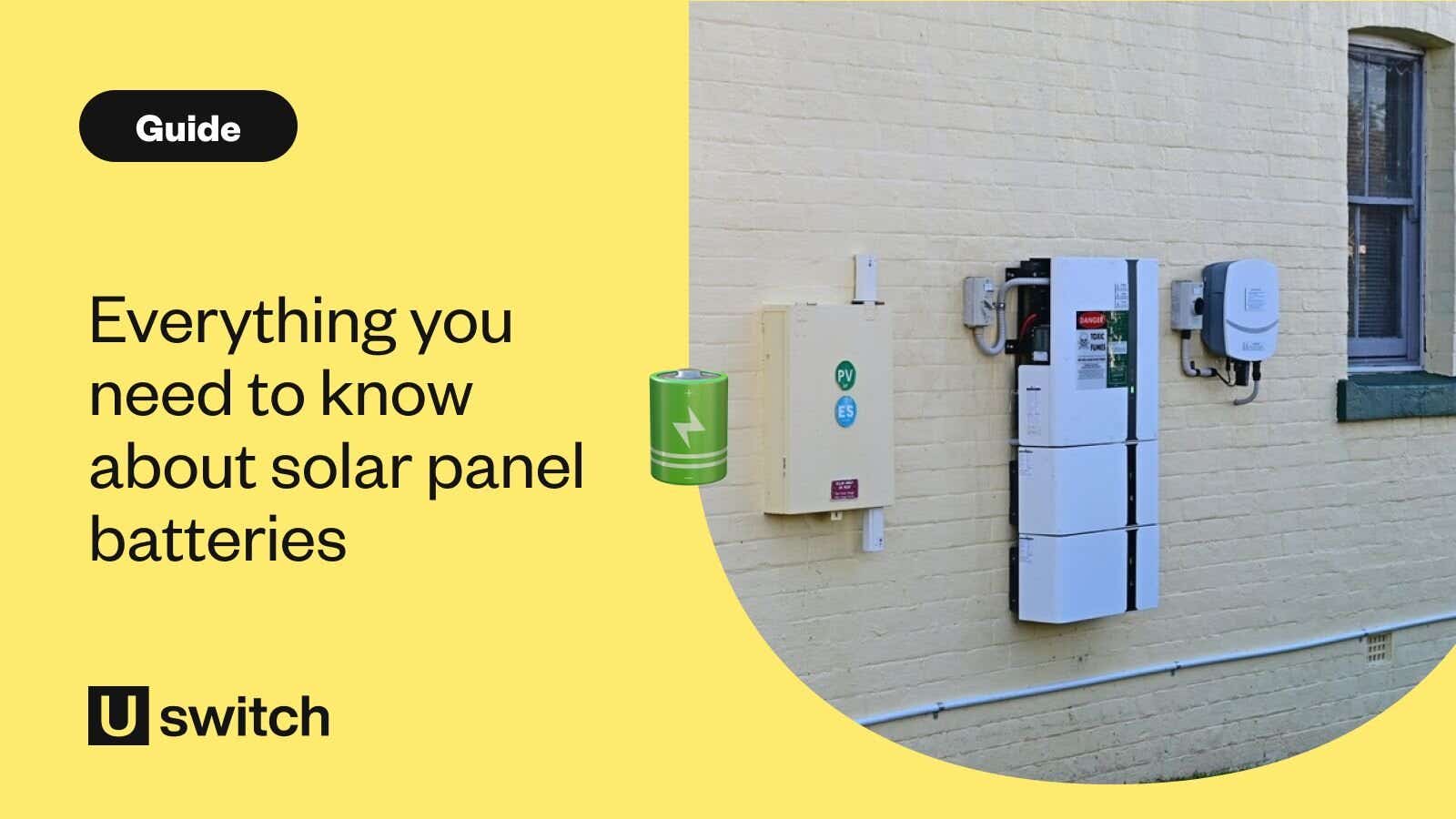
A solar battery is a physical unit that stores the excess electricity your solar panels generate so you can use it later.
Solar batteries offer you more control, helping to increase your energy independence and avoid peak pricing. They also make your home more sustainable, as you’ll be using renewable energy more often.
Compare solar panel quotes
We make it quick and easy to get a solar panel quote. Just enter a few details using our tool, and we’ll show you your best options.
Is a solar battery worth it in the UK in 2026?
Given the solar battery payback period in the UK, it is wise to invest sooner rather than later. Solar batteries can bring a whole host of benefits, reducing your energy costs and helping make your home more sustainable. However, the installation cost is high, and the battery will need to be replaced over time.
Solar batteries are most beneficial for homes that use a lot of energy in the morning and evening, or for homes with an EV or heat pump. Average savings with solar and battery storage will depend on your individual circumstances. However, the financial case for solar batteries is stronger in 2026 than ever before, due to factors like falling battery costs and higher grid electricity rates:
- Store first, export second: The priority is always to use the energy you generate yourself, as it's cheaper than buying from the grid. A battery helps you do this more often, storing electricity for evenings, cloudy days or overnight when your panels aren't producing.
- Earn from your surplus: Any excess energy your battery can't store is automatically exported to the grid. With rising Smart Export Guarantee (SEG) rates, this can earn you additional money on top of your bill savings, making going solar an even stronger financial proposition.
- Make the most of smart tariffs: Some energy suppliers, such as Octopus, Good Energy and E.ON Next, offer time-of-use tariffs designed specifically for homes with solar batteries. These offer lower rates when you charge from the grid and higher rates when you export, giving you more control over your energy costs.
How do solar panel batteries work?
At its most basic, solar power and battery storage allow you to store any excess energy you make when the sun is shining, so you can use it when it’s not. Whether that’s later that day or that month.
Your solar panels will produce power from sunlight, even on cloudy days. However, the energy they create will be much lower, and you’ll often need to supplement it by paying for electricity from the grid. Solar batteries can store energy to use when the weather is poor or when your panels aren’t producing energy in the evening.
How does solar battery storage work with the grid?
Solar batteries act as a buffer between your panels and the grid. This means you won’t have to pay for grid energy unless your panels aren’t producing energy and your battery is running low.
If you have a time-of-use energy tariff, you can also charge some solar panel batteries from the grid during cheaper off-peak times. You can then use this energy whenever you need it.
What happens if my solar battery storage is full?
On a sunny day, a well-sized battery can fill up completely, and in summer, this can happen daily. In winter, shorter days and lower solar output mean full charges are less frequent, but your battery will still cycle regularly. Understanding what happens when it's full helps you make the most of your system year-round.
Your system uses an inverter to decide where energy comes from and goes to, linking your solar panels, battery and the grid. It will normally use electricity from your solar panels to power your home first, then send any excess energy to the battery.
If your solar battery storage is full, surplus is usually sent to the grid. This is called an automatic export, and you could earn money using a Smart Export Guarantee tariff (SEG). Smart systems may also be able to divert excess energy to your immersion heater or EV charger.
How do I install a solar power battery and is it right for my home?
You should use an MCS-certified electrician to install solar power battery storage. They will talk to you about the most suitable place to put it. Normally a well-ventilated part of your home that is easily accessible, such as a garage or utility room. They should not be installed in bedrooms, attics or where they could block an escape route.
Can I add a battery to my existing solar panels?
Yes, you can normally add a battery if you already have solar panels. Your options will depend on your existing system. A certified electrician can normally retrofit a solar battery in two ways:
- AC coupling
Works with your existing inverter if it’s suitable. This helps with cost and how complicated the work will be. However, AC coupling can lead to more conversion losses.
- DC coupling
Less conversion losses but you’ll need to pay for a new inverter. The work is also likely to be more complicated.
What are conversion losses? Different systems use different forms of electrical power: AC (your inverter and home) and DC (your panels and battery).
Every time electricity flows from one system to another, it must be converted and a small amount is lost. AC coupling means the energy produced by your solar panels is changed from AC to DC more times, leading to more conversion losses.
Is solar with battery storage right for my home?
Whether a solar panel battery is right for you will depend on various factors. Battery storage brings lots of benefits, but set-up costs are high, and it’s important to know you’ll get a good return on investment (ROI).
A battery would work for you if:
- Regularly use lots of energy in the early morning/evening.
- You have or are thinking of getting an EV, heat pump or other technology that requires a lot of energy.
- You want a backup power source in case of grid outages.
You may not find it worthwhile if you:
- Are at home a lot during the day, using power from your solar panels as it’s produced.
- You don’t use much energy in general.
- You have limited space in your home.
- Your current roof output is low.
What size solar battery do I need?
The size of solar panel battery you need depends on how much energy you generate and how you use electricity around your home. In the UK, small flats typically need a 2kWh battery, while large family homes could require one that’s 10kWh or larger.
How much does solar power battery storage cost?
In the UK in 2026, typical solar power battery storage costs between £2,500 and £8,000+. Factors impacting price include:
- Capacity and size: These usually affect the cost the most.
- Battery chemical type: Lithium-ion batteries are now the standard option. They are more expensive but also more efficient and should last longer.
- Installation fees: These will vary depending on how complicated the installation is and whether you’re retrofitting a battery into an existing system.
Pros and cons of solar batteries
It’s important to think about the pros and cons when buying solar battery storage in the UK. Solar batteries can save you money, increase energy independence and help you use more renewable energy. However, they cost a lot of money and aren’t right for every household with solar panels:
Pros
- Lower bills
You’ll only be paying for energy from the grid when your panels aren’t producing electricity and your battery is running low.
- Increased self-consumption
On average, this rises from roughly 30% to 70%+ with a battery. Helping you towards energy independence.
- Use more green energy
Charging your battery with solar power means you’ll be using renewable energy as often as possible.
- Battery arbitrage
Most solar batteries will also allow you to charge them from the grid during off-peak periods when energy is cheaper.
- Back-up during power outages
Solar panel batteries can be helpful when the grid has an outage, avoiding power cuts.
Cons
- High upfront costs
Batteries cost thousands of pounds on top of the cost of installing the solar panels themselves. It’s important to be clear on whether the savings you’ll make will pay off.
- Space requirements
Some homes won’t have the space needed for a solar panel battery. It could present a safety risk if installed in the wrong place.
- Solar battery lifespans
Solar panel batteries degrade, with most lasting around 10 – 15 years. You’ll need to replace it if you hope to use solar batteries for a longer period.
Top tips for solar battery longevity
Most solar batteries last 10 to 15 years, but how well you look after yours can make a real difference to where in that range it falls. Here are some top tips to help you get the most from it:
- Temperature control: Avoid placing solar batteries in very cold or hot places, such as attics and sheds. Batteries work best when kept at room temperature in a shady, well-ventilated place.
- Maintenance: Keep the unit clean and ensure airflow isn’t obstructed. Follow any instructions from the manufacturer and installer on how to maintain your solar panel battery.
- Smart charging: Charging at a slower rate in the Summer helps to reduce heat and internal wear. Make sure you update any software for your inverter or battery, so you’re using the latest recommendations for when and how to charge.
- Depth of discharge (DoD): Aim to keep the charge between 20% and 80% to avoid chemical stress. If your battery often drops to 0% it can degrade more quickly.
FAQs
Does government funding apply to solar panel batteries?
There may be funding available for eligible households to install solar batteries.
The Energy Company Obligation scheme (ECO4) runs until December 2026. British Gas, ScottishPower, Octopus, E.ON Next and OVO Energy are among the suppliers taking part. While ECO4 primarily covers solar panels and heating measures, battery storage may be included where a home assessment recommends it as part of a wider installation.
The Warm Homes: Local Grant is largely replacing ECO4 and could also help those eligible in England, with equivalent schemes in Scotland, Wales and Northern Ireland. Some local councils also offer grants or low-interest loans specifically for battery storage - it's worth checking with your local authority.
Do I pay VAT on solar batteries?
You currently pay no VAT on solar battery storage until March 2027. That’s whether it’s installed alongside or in addition to your existing solar panels.
You must buy storage via an installer, who can then ensure the 0% rate of VAT is applied. If you live in Northern Ireland, the scheme is different and will depend on the cost of what you’re installing.
How long do solar batteries last?
Solar battery storage typically lasts 10 – 15 years, depending on the battery you buy and how well you look after it.
There are many ways you can slow down battery degradation. These include installing it in a well-ventilated area and keeping it at room temperature. As well as not allowing it to drop to 0% charge regularly.
Do I need solar panels to have battery storage?
You don’t need solar panels to get a storage battery. Some homes install standalone storage and charge it from the grid off-peak overnight. This saves them money as costs are lower. Then they can use the energy at a time that’s most convenient for them.
