Are solar panels worth it in the UK?

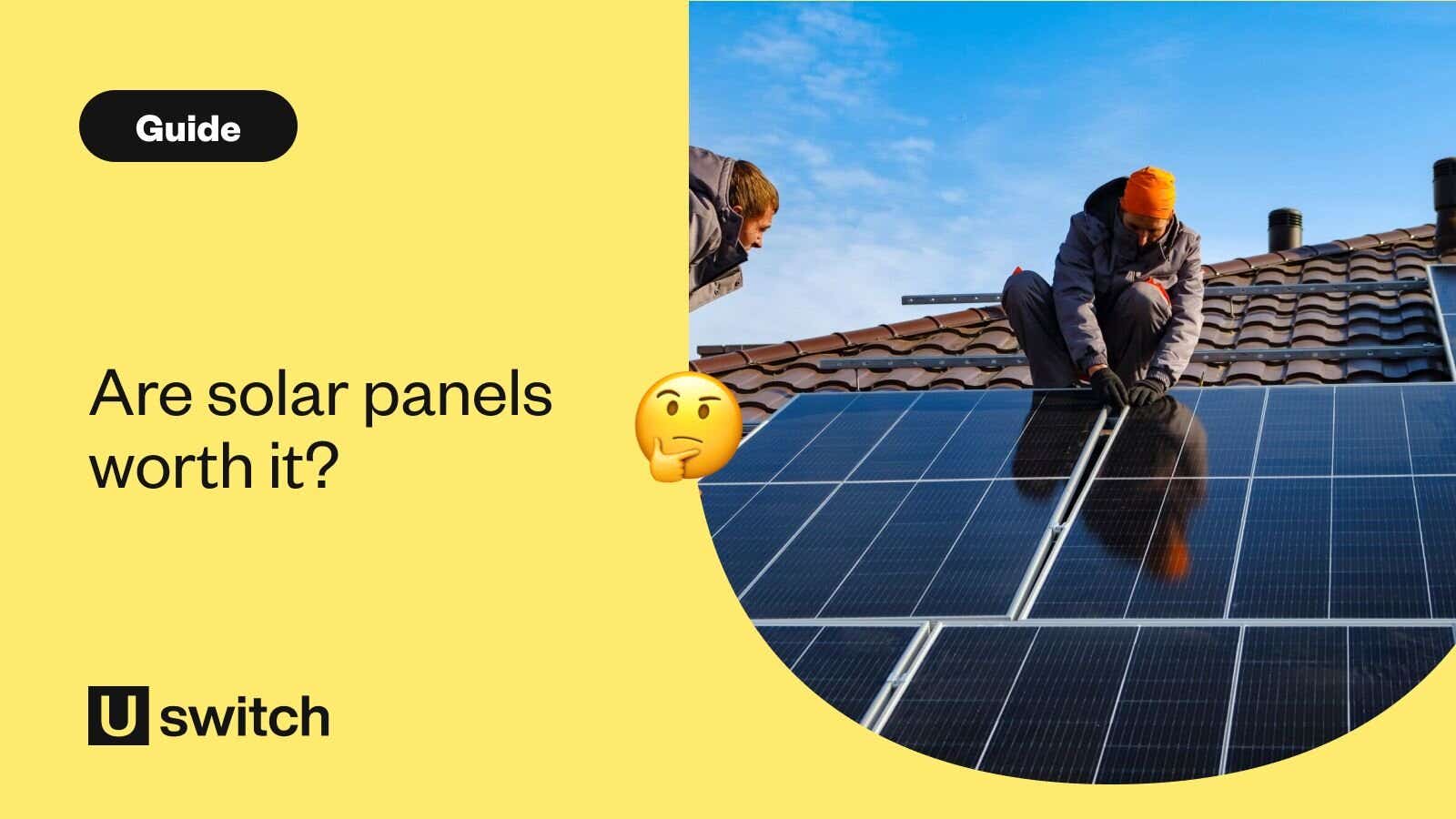
Are solar panels worth it?
Solar panels are worth it for most households that can afford the installation costs and aren't planning to move in at least the next few years, because they help reduce energy bills and earn extra money from selling excess electricity to the grid. In a world where energy price shocks and bill hikes are a regular occurrence, solar panels can provide stability and insulation from an unstable energy market.
Who are solar panels best for?
Solar panels are best for those with a suitable roof who aren't planning to move and who use a lot of electricity.
Solar panels work best when:
- You have a home with a suitable roof
Typically, south-facing, not in the shade, made of a suitable material, and angled well.
- You use a lot of electricity
Particularly during the day, as that’s when your panels will be creating power.
- You plan to stay in your home for a long time
The solar panel's payback period is typically years.
- You can make good use of the power generated or get SEG payments for sending it to the grid
If you have solar panels, these are important ways to see a return on your investment.
Solar panels might not work for you if:
- You have a roof that is north-facing or heavily shaded
Solar panels are unlikely to make the power needed to see a return on investment.
- You use very little electricity
If you’re out during the day or don’t use much power when you’re at home, your solar panel payback period will be longer.
- You’re likely to move in the near future
As you won’t have been using your solar panels long enough to make sufficient savings.
- You can’t justify the upfront cost
They’re a big investment, however some households may be eligible for solar panel grants.
How much can solar panels save on your energy bills?
Solar panels can save you money on your energy bills by reducing the amount of power you have to pay for from the grid. That’s because you’ll be using the electricity your panels have created.
How solar panels reduce your bill
Your house's solar panels generate electricity during daylight hours. They do this even when it’s cloudy, although they’ll produce less during these times.
Any electricity you use directly from your solar panels is electricity you don’t need to buy from your supplier. If you have a solar panel battery, this can help by storing surplus electricity for early mornings, evenings, nighttime and cloudy days.
The more of your own power you use, the more likely it is that solar panels will be worth it for your UK home.
What affects your savings?
Any savings you make on your energy bills will depend on:
- The size of your solar panel system for your house.
- The amount of electricity your household typically uses.
- If you’re often at home during the day.
- Whether your roof gets strong sunlight or shade.
- Whether you have a solar panel battery.
- The price of buying electricity from the grid.
- The SEG tariff you’re able to get through an energy supplier.
Why daytime use matters
This is a really important point to bear in mind. If you use lots of electricity during the day, you’re more likely to get higher savings on your energy bills. So, if you work from home or are in during the day for other reasons, you’re likely to see a better solar panel return on investment.
If you’re out most of the day, you could still see benefits if you use a solar panel battery. You could also look for Smart Export Guarantee rates that make solar panels worth it for you. However, you’re likely to get a longer solar panel payback period than someone who uses lots of energy in the daytime.
What is the solar panel payback period?
When considering whether solar panels are worth it, it is important to understand the payback period.
What does “payback period” mean?
The “solar panel payback period” is the time it takes to recover the cost of the solar panels. It’s based on the time it takes for the money you save on your energy bills and any solar export payments to be equal to how much you spent on the solar panel system plus any maintenance and other costs.
How long does it take to break even?
Installing solar panels for your house is a long-term investment. While the upfront cost is significant, for households that can afford it, the payback period is typically 7 to 10 years, after which the savings are essentially money in your pocket.
Factors that affect the length of the solar panel payback period include
- How much do your installation and any other initial costs come to? Lower initial costs mean less payback is needed. You should also factor in maintenance costs here.
- How much electricity you use during the day: Higher power needs in the daytime normally mean quicker savings.
- Whether you have a battery: Solar panel batteries help improve self-consumption (how much you use from the energy you create).
- Solar export rates: How much you can earn through SEG tariffs will impact the solar payback period. Rates vary, and suppliers can offer anything over 0p.
- Grid electricity prices: Higher prices mean you’re making more savings on your bills.
- Your roof conditions: If your roof is in the shade or you live in an area that gets less sunlight, it will take longer to see a return on investment on solar panels.
- If you plan to move home: you’ll need to weigh up the pros and cons before looking to move home before the end of your solar panel payback period. Although solar panels can add some value to your home when you sell, it may not be enough to mean you’ve seen a return on your initial investment.
It’s important to bear in mind that the point at which you “break even” is not fixed. It varies from household to household and can change over time. For instance, if the price of grid energy drops, you’ll be making savings more slowly.
Can you make money by selling electricity via the Smart Export Guarantee?
The Smart Export Guarantee, or SEG, is a scheme where you can be paid for energy you generate (i.e. through solar panels) and export to the grid.
If you have a solar panel battery, you can store any surplus energy and send it to the grid during times when the best SEG tariffs are offered. However, you have to factor in the additional cost of buying a solar panel battery.
How much do solar panels cost in the UK?
As far as the suppliers Uswitch works with are concerned, solar panels cost on average £4,600 to £8,000. Prices naturally vary by home and system size and whether you’re looking to get a solar panel battery.
There is currently 0% VAT paid on solar panels and batteries until March 2027. This saving comes from the government's VAT Relief for Energy-Saving Materials scheme, introduced in the 2022 Spring Statement to help households go green. This means a big cost saving for anyone ready to buy solar panels before then.
Typical solar panel costs by home size
The cost of solar panels for your house varies greatly, but assuming 0% VAT and a standard installation, you can expect to pay these rough amounts according to the installers we work with.
| Home size | System size | Number of panels | Estimated cost |
|---|---|---|---|
| Small (1-2 bedrooms) | 2kW | 4-5 panels | £4,600-£5,800 |
| Medium (3-4 bedrooms) | 4kW | 7-9 panels | £5,000-£7,000 |
| Large (4+ bedrooms) | 6kW | 11-13 panels | £6,000-£8,000 |
Compare solar panel quotes
Want to see how much solar panels will cost to install? Answer a few questions and get quotes from reliable installers now.
Solar panels pros and cons
When considering whether solar panels are worth it in the UK, weigh the pros and cons. Every household is different, and the decision needs to be based on lots of factors, including how much energy you use and how expensive the installation will be for your home.
Pros
Solar panels can lower your electricity bills as you’re using less grid power.
You’ll be less reliant on the grid, making you more energy self-sufficient.
You can earn money from the energy you send to the grid by shopping for a good SEG tariff.
Solar panels help you to be more sustainable and cut your household carbon emissions.
They can provide long-term value over their lifespan.
Cons
They have a high upfront cost, on average £6,100 according to the Energy Saving Trust.
Solar panel batteries can help you make the most of the energy you create, but add significantly to the price.
The solar panel payback period is years, normally around 7-10 years.
Savings will vary a lot, depending on your home and how/when you use electricity.
Although solar panel maintenance costs are normally low, there are still expenses and tasks to consider.
Solar power may not be suitable for your roof, especially if it’s shady.
When are solar panels not worth it?
Deciding whether to buy solar panels will depend on your personal circumstances. However, there are a few scenarios when solar panels almost certainly aren’t worth it in the UK:
- Your roof is heavily shaded or poorly positioned: Shade from trees or neighbouring buildings can reduce generation and weaken the return. The Energy Saving Trust recommends choosing a south-facing roof with little or no shading. It also may not be worth it if your roof makes installation complicated, as it may make the installation costs too high.
- You plan to move home soon: Since solar panel payback typically takes years, you won't see a return on investment if you move soon, even if your solar panels add value to your house.
- Your electricity use is very low: If you use very little electricity, especially during the day, the energy savings you could make will be lower.
What are the environmental benefits of solar panels?
Solar panels don’t just have the potential to be good for your wallet - they also help you to cut your carbon emissions and use more sustainable energy.
How solar panels can cut a home’s carbon footprint
Solar panels allow you to create your own sustainable form of electricity at home. Using your own solar power reduces the amount of grid electricity you need and lowers your home’s carbon footprint over time.
If an average 4kW solar panel system produces around 3,500 kWh of renewable energy per year, this saves around 0.5 to 0.6 tonnes of CO2*. That’s roughly the equivalent of planting 25 to 30 trees or driving a standard petrol car 1,500 fewer miles a year.
The amount of energy generated will vary from household to household. However, it’s great to know that if you do get solar panels, they’ll be contributing to a greener world.
*Based on the current 2026 grid intensity average (approx. 150g CO2 per kWh).
FAQs
Are solar batteries worth it?
Solar panel batteries can help you to store and use more of your energy. As well as being able to send it to the grid at certain times when some suppliers pay better SEG tariff rates. However, they are a substantial additional cost when you’re already paying for solar panels.
According to the installers we work with, adding a solar panel battery comes at an estimated cost of:
- £2,500-£3,400 for a standard solar battery (5kWh).
- £3,700-£5,000 for a large battery (10kWh).
How long do solar panels last?
Solar panels are a long-life home improvement, often lasting 25 years or more. The Energy Saving Trust says that solar panel systems can last up to 30 years when properly maintained. This includes cleaning, checks and replacing parts that fail.
How much could solar panel maintenance cost?
Maintaining your solar panels regularly is important. Dirt and debris can block out sunlight and impact the amount of electricity they create. Ignoring warning signs of a fault can mean a higher cost in the long run.
The Energy Saving Trust recommends that your solar panels be cleaned “every 12-18 months”. If your panels are easily and safely accessed, the Energy Saving Trust says, “you might be confident that you can clean them yourself”. For professional cleaning, most sources put the cost at around £4–£15 per panel, or roughly £80–£150 for a typical home installation of 10–16 panels. Make sure you follow any guidelines from the manufacturer and installer; you may invalidate your warranty or damage your solar panels.
Unless a large part fails, solar panel maintenance costs shouldn’t be a high regular expense. However, it’s important to research and budget for maintenance properly.
Do solar panels become less effective over time?
Solar panels do become less efficient over time, but this normally happens gradually. Unless a part fails, they don’t often just stop working after a certain number of years. This process is called degradation and is usually caused by wear, weather, and UV exposure.
You should review warranties before you purchase solar panels, choosing one that will protect you for the right length of time.
