Smart Export Guarantee (SEG) September 2026: make money from your solar panels

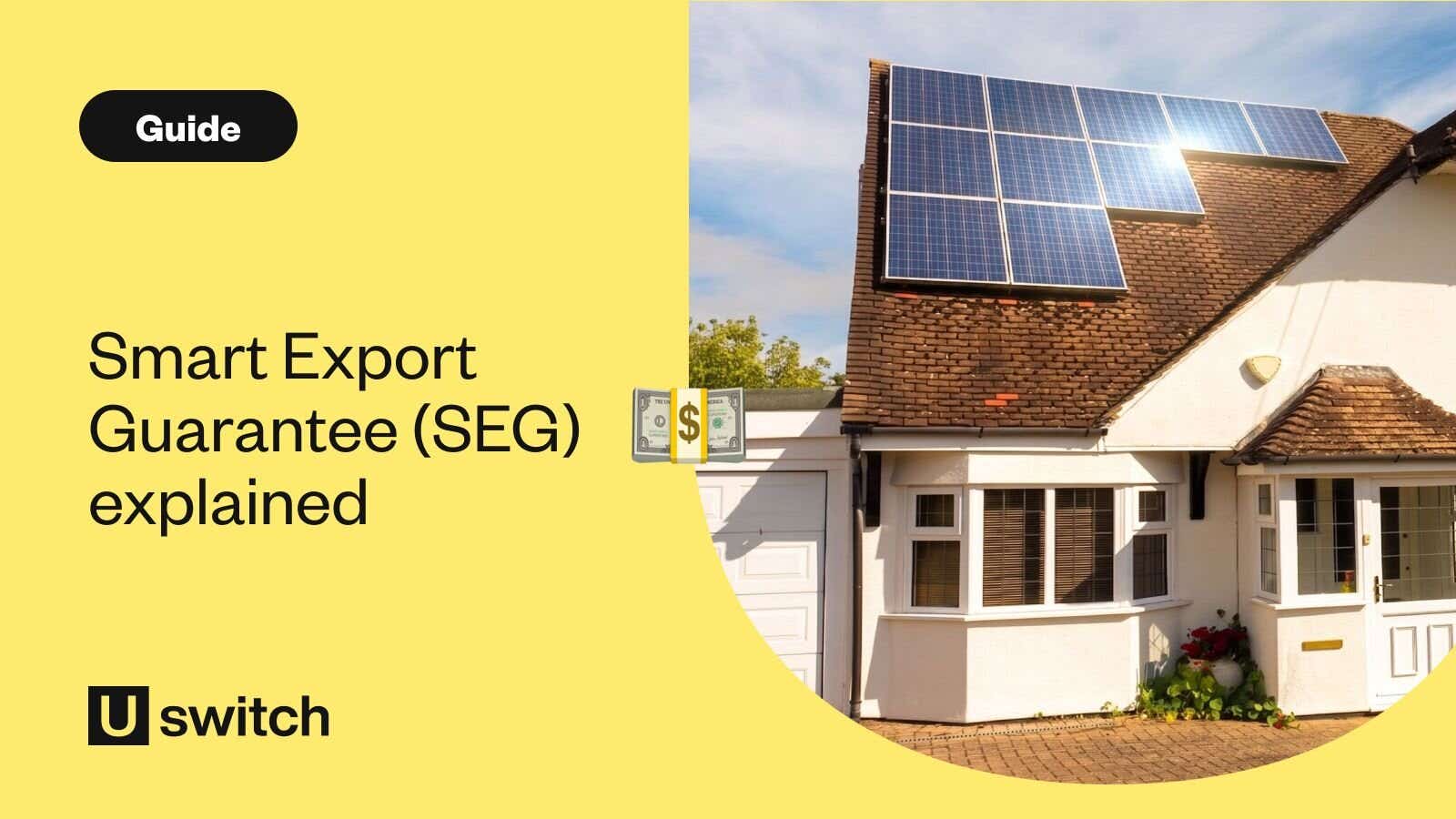
What is the Smart Export Guarantee (SEG)?
The Smart Export Guarantee (SEG) is a government-backed scheme that helps households generate income from their solar panels. It was launched in 2020 and aims to encourage more homes to create and use renewable energy.
SEG means energy suppliers have to pay eligible homeowners for surplus energy they send back to the grid. So, if your solar panels are generating more power than you use, you could be earning money.
Each supplier sets its own SEG tariff rate, which can be any amount greater than zero. It’s always worth shopping around for the best SEG rates in 2026. Plus, some suppliers will offer you better rates for sending energy to the grid at certain times of day.
SEG is designed to replace the Feed-in Tariff (FIT) scheme, which has largely closed to new applicants. FIT pays households both for generating and exporting renewable energy, while SEG tariffs focus on exports.
Compare solar panel quotes
Want to see how much solar panels will cost to install? Answer a few questions and get quotes from reliable installers now.
What are the current Smart Export Guarantee rates?
These are the main SEG export rates currently offered by suppliers. It's worth noting that some suppliers have multiple tariffs with different qualifying criteria, which you can find on their websites.
| Supplier | Tariff name | Variable or fixed? | Rate per kWh | Frequency paid | Type of tariff |
|---|---|---|---|---|---|
| British Gas | Export Premium | Variable | 12p | Quarterly | Must be with the same supplier for solar export and energy supply |
| British Gas | Export SEG | Variable | 3p | Quarterly | Standalone export tariff |
| E | SEG Tariff | Variable | 3p | Yearly | Standalone export tariff |
| Ecotricity | Smart Export Tariff | Variable | 16p | Quarterly | Must be with the same supplier for solar export and energy supply |
| EDF Energy | Export 12m | Fixed | 15p | Monthly | Must be with the same supplier for solar export and energy supply |
| EDF Energy | SEG Export Variable | Variable | 3p | Quarterly | Standalone export tariff |
| E.ON Next | Next Export Exclusive v3 | Fixed | 13p | Yearly | Must be with the same supplier for solar export and energy supply |
| E.ON Next | Next Flex Export v1 | Fixed | 6p | Yearly | Standalone export tariff |
| Good Energy | Solar Savings | Variable | 15p | Quarterly | Must be with the same supplier for solar export and energy supply |
| Octopus Energy | Outgoing | Variable | 12p | Monthly | Must be with the same supplier for solar export and energy supply |
| Octopus Energy | Smart Export Guarantee Tariff | Fixed | 4.1p | Monthly | Standalone export tariff |
| OVO Energy | SEG Beyond Exclusive | Fixed | 12p | Quarterly | Must be with the same supplier for solar export and energy supply |
| OVO Energy | SEG | Fixed | 4p | Quarterly | Standalone export tariff |
| ScottishPower | SmartGen Premium | Variable | 12p | Quarterly | Must be with the same supplier for solar export and energy supply |
| ScottishPower | SmartGen | Variable | 6p | Quarterly | Standalone export tariff |
| So Energy | So Bright Export | Fixed | 20p | Monthly | Must be with the same supplier for solar export and energy supply |
| So Energy | So Export Flex | Variable | 4.5p | Monthly | Standalone export tariff |
| Utilita | Utilita Smart Export Guarantee | Fixed | 3p | Quarterly | Standalone export tariff |
| Utility Warehouse | UW Smart Export Guarantee - Standard | Variable | 2p | Quarterly | Standalone export tariff |
Rates correct as of 15 July 2026.
How much can you save with the Smart Export Guarantee?
The amount you can save with the Smart Export Guarantee (SEG) depends on several factors, including:
- How much electricity your solar panels create
- How much you use or store on a solar panel battery for your own use
- How much you send to the grid
- The SEG tariff you have signed up for.
If you have a typical 3.5kWp system exporting 1,500 kWh per year at 15p per kWh, you can expect to earn around £225 per year.
As the cost of buying energy from the grid is normally higher than SEG tariff rates, it doesn’t make financial sense to export energy you would use. However, if you have excess energy that you won’t use, registering for the Smart Export Guarantee is a great way to earn some additional money.
Why the Smart Export Guarantee replaced the Feed-in tariff
The FIT (Feed-in Tariff) is a government subsidy that pays fixed amounts for both the generation of renewable energy and sending it to the grid. Meanwhile, the Smart Export Guarantee (SEG) is a market-led payment and covers exported energy only.
The government closed the FIT (Feed-in Tariff) scheme to new applicants in 2019 and launched SEG in 2020. The Smart Export Guarantee was created to continue rewarding homeowners for sending renewable energy to the grid.
Although you’re only paid for the energy you send to the grid on a SEG tariff, there are benefits. Unlike FIT, suppliers can set their own SEG rates, meaning there’s competition between suppliers and potentially a better deal for you.
Who is eligible for a Smart Export Guarantee tariff?
You must meet certain criteria to be eligible for Smart Export Guarantee rates. You need:
- Eligible low-carbon technology that creates energy: This includes solar panels, wind power, hydropower and anaerobic digestion up to 5MW. As well as micro combined heat and power systems under 50kW.
- An MCS certificate or equivalent: Confirming that both your solar panels and their installation meet safety and performance standards.
- A smart meter capable of half-hourly readings: This means suppliers can see how much energy you’re sending to the grid and calculate your solar export payments.
SEG suppliers may also have their own eligibility checks, such as checking ownership documents. Some suppliers will have SEG tariffs that are available only to their own energy or solar panel customers.
What types of SEG tariffs are available?
There are two types of Smart Export Guarantee (SEG) tariffs available, each offering different benefits:
- Fixed SEG tariffs: Best for budget certainty, these have a set price per kWh for the contract term (usually 12 months).
- Variable SEG tariffs: Rates fluctuate with market prices, meaning they could rise or fall. There is potential to earn more from these tariffs, but they carry a larger amount of risk and are much less predictable.
How to apply for a Smart Export Guarantee tariff
Not sure where to start? Here’s a simple step-by-step guide on how to apply for a Smart Export Guarantee rate for your home:
- Check your smart meter
Start by checking your metering set-up. It’s important to have a fully functioning smart meter that can send export readings every half an hour. Without this, you won’t be able to apply.
- Gather the essential documents
You’ll need your MCS certificate and G98/G99 network connection letter. Don’t forget, some suppliers may require other documents, so check this in advance.
- Choose the right supplier for you
You don’t have to use your energy supplier for SEG, but bundled rates are often higher. This can also be the case if you go with the supplier you bought your solar panels from.
- Wait for it to review your application
This normally takes around 6-12 weeks.
What if you’re already on a Feed-in tariff?
If you already receive FIT payments, you may still be able to benefit from the Smart Export Guarantee. Remember that your FIT payments are split into two parts:
- Generation: All the energy your solar panels create, whether you use it or not.
- Export: The energy you send to the grid.
Under certain circumstances, you can keep your FIT generation payments but switch your solar export payments to SEG. In general, the market rate is normally higher on SEG (currently around 5.5p on FIT export, compared to around 15p on a SEG tariff). So it’s worth considering, however, you should bear in mind that:
- SEG rates are driven by the market and could decline significantly over time. While most FIT payment contracts agreed before 2020 guarantee a rate of payment for 20 or 25 years.
- You do not need a smart meter for FIT payments. This may be an additional cost if you don’t have one and want to move to SEG.
- If you’re on a “deemed export” rate, you cannot go back to this if you want to go back to FIT. A deemed export rate is where you do not have a smart meter, and they assume you’re exporting 50% of your energy.
- There may be limits on how often you can change between FIT and SEG. For instance, you can only opt out of FIT export payments once a year.
- When considering which is better, SEG vs FIT, everyone is different. You must consider your current set-up, the rates that are available to you, and how much certainty you’re looking for.
FAQs
Can I claim SEG payments if I have a battery storage system?
Yes, as long as you have an eligible system and both your solar panels and battery are MCS certified. If you have a battery, you’re likely to use more of the energy you create yourself. However, it’s often still worth signing up for SEG.
A battery can help you make the most of special rates for sending power to the grid during certain times. Not all suppliers offer these, but they’re becoming more common. Use our SEG calculator to find the right deal for you.
Do I need to be a customer of my SEG supplier for my energy import too?
It depends - some suppliers require you to be a regular energy customer to access SEG tariff, but some don't.
Do SEG payments affect my tax bill?
Most UK domestic homeowners using a system designed mainly for their own needs will find that SEG payments are exempt from income tax. However, you should speak to a tax advisor to be certain.
It’s important to note that if you’re earning more than your £1,000 trading allowance from SEG payments and other supplementary income, you may need to file a tax return and pay tax.
What happens to my SEG tariff if I switch energy supplier?
Your SEG tariff and the energy you get from the grid are separate. You should be able to switch one without impacting the other, unless you’re on a special SEG tariff just for energy customers. Check that you’re not missing out on the best deal by using the same supplier for both before switching.
Can renters or flat owners get SEG payments?
As solar panels belong to the building and your landlord will be the legal beneficiary, you cannot claim SEG payments if you rent. However, your landlord may be happy to negotiate on the cost you pay for using energy generated by the solar panels.
If you own a flat or are a leaseholder, installing solar panels can be complicated. You’ll need to speak to the freeholder and other residents. Always seek professional advice if you’re unsure.
What is the highest SEG rate available in 2026?
As of July 2026, the highest SEG rate is 20p per kWh, which is offered by So Energy on its So Bright Export tariff. Rates change often, and you can normally get a higher rate by signing up for a bundle. This is where you choose the same supplier for your SEG tariff and energy from the grid.
