Floor insulation

Do I need floor insulation?
There's no point in investing in expensive floor insulation if you don't need it, or if it's unsuitable for your home.
Whether you need floor insulation depends on your home and what kind of floors it has:
- Older houses with 'suspended floors', which are in effect above a void, are likely to lose more heat through the floor.
- Homes with solid (concrete) floors, built since the 1930s, have less of a problem. Concrete floor insulation can, however, be installed and usually consists of a layer of solid insulation placed directly on the floor.
- Modern houses tend to incorporate slabs of polystyrene insulation a few inches below the concrete floor surface, effectively reducing this type of heat loss.
Whatever your home, there's still some kind of measure you can take to insulate your floor.
Four ways to insulate your floor
- Draught-proofing - simply use sealant or caulking to fill the gaps between your floorboards and between skirting boards and the floor.
- Add an insulating layer under your carpet or floor covering - try a fibreboard underlay or polyfoam board.
- A rug - putting a rug on top of bare floorboards will help to block some draughts and keep your toes warm.
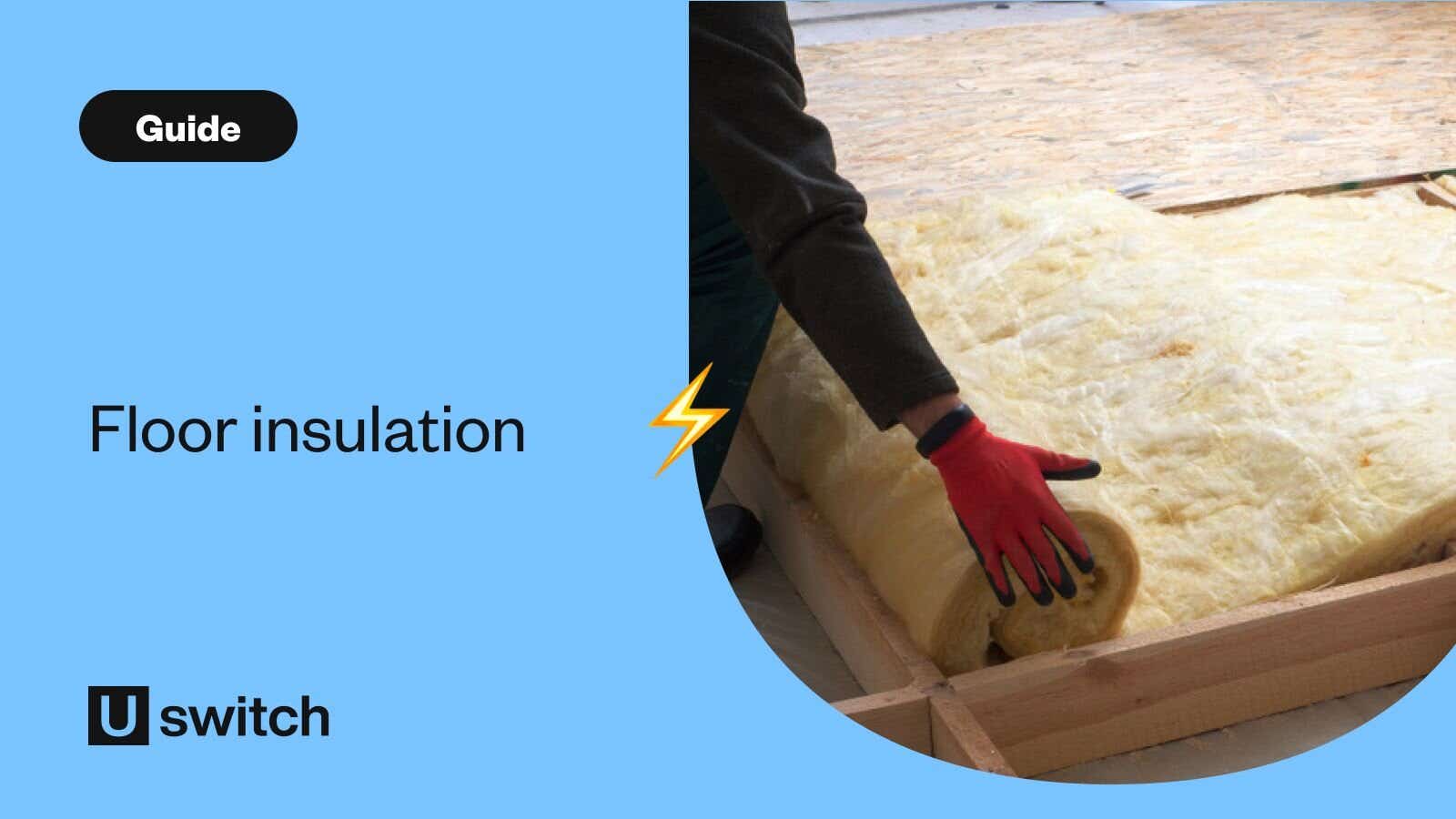
- Underfloor insulation - if you have an access hatch into the crawlspace (void) below the floorboards, this is a relatively easy process. If not, the floorboards will need to be taken up.
Netting or wooden battens will be needed to hold glass or mineral wool-style insulation in place beneath the floorboards. Alternatively, it may be easier to use blocks of insulation, called batts, rather than blanket-style insulation. Batts typically also have the advantage of having a slightly higher R-value - the higher the R-value, the greater the insulator's effectiveness. Sheep's wool could also be considered, due to its breathability.
Insulating your floor could save you £55-£70 a year on your bills if you live in a semi-detached house.
One thing to remember, however, is the need for ventilation. The void (or crawlspace) below the floorboards will have ventilation grilles. These should not be blocked up, as floorboards may otherwise become damp and start to rot.
How much does suspended floor insulation cost?
The cost to insulate a suspended floor varies depending on house size, the materials used and how accessible the space is under the floorboards.
In 2026, Checkatrade estimated the typical cost of suspended timber floor insulation to be around £105 per square metre. Note: the cost will rise significantly if any floorboards need replacing due to general wear and tear, dry rot or water damage.
How much does solid floor insulation cost?
Solid floor insulation is cheaper than suspended floor insulation because you only need to remove rugs or carpets and lay the insulating layer directly on the floor.
Again, costs depend on the house size, materials used and how accessible the solid floor is (prices will likely increase significantly if you’re fitting insulation beneath a tiled or hardwood floor that will need to be removed and refitted or replaced, for example).
Checkatrade estimates the typical cost of solid floor insulation to be around £80 per square metre for a floating floor and £90/m2 for a floor with a screed finish.
Grants and other funding support for floor insulation
As with most types of insulation, you may be eligible for grants or interest-free loans to help pay for floor insulation, depending on where you live and your financial circumstances. Visit our Home insulation page to find out what financial help may be available.
It’s also worth noting that eligible energy-saving home upgrades – including floor insulation – are also subject to 0% VAT until 31 March 2027, after which the rate is expected to revert to 5%. This only applies when fitted by a VAT-registered installer – if you source the materials and fit them yourself, you’re liable for the full 20% VAT on all purchases.
DIY vs. professional floor insulation
If you have solid floors or you don’t feel confident lifting floorboards yourself, it’s recommended you hire a professional to carry out insulation work.
But some home insulation jobs are easy enough to do yourself. You can plug the gaps between floors and skirting boards with sealant bought from a local DIY store.
If you have a cellar or basement you can access, you could insulate a timber floor yourself as long as the joists don’t show any signs of rot.
What else should you insulate in the home?
While floor insulation is a great way to save money, it’s by no means the first form of insulation you should look at around your home.
Loft insulation
If your property has a roof with attic space, then loft insulation is the first thing to consider. An estimated 25% of the heat in your home is lost through the loft.
Loft insulation is cheap to buy, easy to install (you can even do it yourself) and can save you serious amounts of money over the years.
Wall insulation
While significantly more expensive to install than loft insulation, wall insulation could save you even more money over the long term.
Cavity wall insulation, typically suitable for homes built after 1930, consists of pumping insulation into the space between the outer and the inner walls. Solid wall insulation, for homes built earlier, insulates around the outer wall itself.
Draught-proofing
If installing proper insulation sounds like too much work, don't worry. There’s a quick-fix solution that could still save you money and energy and is cheap to buy and easy to do yourself.
Draught-proofing is all about securing the cracks and spaces around typical areas of heat loss around the home. The most common culprits are windows and doors (and their frames), but you should also check for draughts around letterboxes and chimneys.
