Oppo Find X9 Ultra Review

Oppo Find X9 Ultra pros and cons
Exceptional five-camera setup and software array.
Massive 7050mAh silicon-carbon battery.
Robust durability, up to IP69 certification.
Vivid 144Hz AMOLED display.
Bulky device at up to 236g.
Image processing can generate heat.
Ultra-premium price point, softened by launch incentives.
Few devices make as concerted a bid for smartphone supremacy as the Oppo Find X9 Ultra.
Arriving as the Chinese heavyweight’s major flagship launch for 2026, the Find X9 Ultra pairs bleeding-edge imaging tech - including a world’s first lens array - and an AI-filled software experience with a bold, yet robust design.
This results in a device designed without compromise, with clear ambitions to dominate the premium segment.
Does it have what it takes to be the next great flagship? Read our extensive review of the Oppo Find X9 Ultra to find out!

Design and specifications
It’s really tough to overstate just how much the Find X9 Ultra makes an effort to give a premium experience from its first moments, making for a device that commands attention.
Leaning heavily into camera design language and drawing clear aesthetic inspiration from a legendary mirrorless effort in the Hasselblad X2D, it’s certainly one of the most impressive unboxing experiences from recent memory in terms of look and feel.
The horizontally-aligned Oppo and Hasselblad logos across an eco-friendly brown vegan leather rear on the lead Tundra Umber model give an immediate indication as to both its premium pedigree, and preferred orientation for photography.
This specific dusky finish - our version for review - channels all of the Scandinavian minimalism of the lauded Swedish camera creator, as well as makes the phone feel incredibly tactile and grippy, thanks to confident texturing throughout.
Those looking to go bolder, the alternative Canyon Orange edition uses aircraft-grade fibre to give a splash of colour and ensure structural durability without sacrificing a slender form factor.

It is impossible to ignore the gorgeous camera module, consisting of an amalgam of a finely hewn circular housing and a striking inner hexagonal section - cleverly mirroring the aperture blades of professional camera lenses.
Surrounding this outer housing is an array of precise etching, creating the most tactile and ergonomic feel, achieved through high-precision machining. This beautiful texture echoes the focus ring of a traditional lens, while the iconic Hasselblad orange flourish adds a signature finishing touch that reaffirms the Find X9 Ultra’s premium positioning.
The Find X9 Ultra actually shares some core similarities in terms of overall chassis layout and button placements with its well-reviewed sibling, the Find X9 Pro, but the Ultra is undeniably heftier - and for good reason.
The Tundra Umber model weighs 236g with a thickness of 9.10mm, whereas the Canyon Orange version is a shade lighter - and narrower - at 235g and 8.65mm respectively.
So while last year’s X9 Pro cut a sleek 8.25mm profile and weighed just 224g, the Ultra adds noticeable bulk to accommodate its array of advanced optics - a point to note.
Equally, an third white X9 Ultra colourway seems to be limited to a local launch in China, which is a shame as it was another attractive option.
Another shared element with the Pro is a ‘Quick Button’ in the lower-right corner of the device - or top-right when in landscape - now both larger and finished in signature Hasselblad orange on the Find X9 Ultra.
This is perfectly placed to act as a dedicated shutter button for photos, as well as serving as a more physical slider to zoom more granularly.
Lending effortless access, whether shooting in portrait or landscape, it cleverly only triggers the zoom functionality when in the latter orientation, but is an experience delivered largely by haptic force feedback rather than a physical button on the X9 Ultra - noticeable by its lack of response when the device is turned off.
It’s also admittedly a tad imprecise in terms of recognising presses versus swipes when in the heat of trying to capture a fleeting moment - something a dedicated Teleconverter kit solves, but more on that later…

The Find X9 Ultra also provide peace of mind against the elements with comprehensive IP66, IP68, and IP69 protection ratings against water and dust, alongside SGS 5-star drop resistance and Corning Gorilla Glass Victus 2 on the front display.
It might all sound like the usual bullet points for build quality, but the elusive IP69 rating means this device also guarantees protection against high-pressure, high-temperature water jets, a level of industrial-grade resilience that is a level beyond flagship stablemates such as the iPhone 17 Pro Max and Galaxy S26 Ultra.
All in all, the Oppo Find X9 Ultra is a real masterclass in delivering flagship finish and build quality to bear in a beautiful, bold design look that firmly states its top-tier intentions - the Tundra Umber model seems set to win more than a few converts from looks alone.

Display and audio
Proof that the Find X9 Ultra’s beauty isn’t just skin deep is when looking at its 6.82-inch LTPO AMOLED display. With fluid adaptation between 1 and up to a 144Hz refresh rate, this QHD+ screen boasts a pristine 3168 x 1440 resolution, with a beautifully dense 510 pixels per inch and razor-thin bezels whilst housing a front-facing lens and swift fingerprint sensor.
Powered by Oppo's bespoke display chips and upgraded luminescent material, the X9 Ultra’s panel deftly minimises motion blur while offering support for both Dolby Vision and HDR Vivid for cinematic playback for both native content and via streaming services.
Brightness is equally well handled. The screen reaches an impressive 1800 nits of full-screen brightness and peaks at a staggering 3600 nits for HDR content, ensuring flawless outdoor legibility even under direct sunlight, with relatively minimal reflective glare - as well as making for accurate representation when viewing photos natively on the device.

Oppo has also thoughtfully incorporated circular polarisation technology so the screen remains perfectly visible and colour-accurate when wearing polarised sunglasses.
At the other end of the spectrum, the panel can drop to just 1 nit for comfortable viewing in pitch-black rooms, working alongside 2160Hz high-frequency PWM dimming to significantly reduce flicker during inevitable late-night sessions - the ideal antidote to eye strain.
Audio recording is premium, utilising a four-microphone setup to deliver Studio-Grade Audio and highly effective ambient noise reduction. Sadly, the audio playback situation is noticeably less rosy, with a lack of support for analogue audio through the USB-C port, which is a genuine frustration if you rely on older wired headphones or professional monitoring gear.
Audiophiles will need to make sure they have a dedicated digital DAC dongle to hand, or simply resign themselves to the world of Bluetooth audio - a slight misstep on a device that otherwise caters so heavily to creative professionals in other areas.
In summary, the Find X9 Ultra is wired for picture and sound in terms of delivering a top-flight experience - if only figuratively rather than literally in the case of the latter.
Camera capabilities

The Find X9 Ultra truly comes into its own here, as Oppo has equipped this device with an incredibly ambitious imaging system.
Having put it through its paces with literally thousands of photos in the last week or so - all photos in this review taken natively on the X9 Ultra - we can confidently state that it takes some of the most incredible images we’ve ever seen from a smartphone, and confidently earns its ‘Ultra’ status in the photography stakes.
Every lens in this five-camera array has been entirely custom-developed, with the results speaking volumes.
The main shooter is a 200MP camera, powered by Sony’s LYTIA 901 sensor. Measuring 1/1.12 inches, it is an enormous piece of silicon for a smartphone, and when pairing a massive sensor like this with a fast f/1.5 aperture and dedicated optical image stabilisation, it genuinely matches the light intake of a 1-inch main camera.
There’s also a really cool way in which the Find X9 Ultra delivers great - and consistent - dynamic range on photos, instantly stacking up to three exposures per frame to make sure all angles of light are covered - with the result borne out in some of these incredible photos taken during a press tour in China.
Given the option to take 200 megapixels natively on tap, any cropping to 2x zoom delivers 50MP of native pixels at a highly natural 50mm equivalent focal length.
The ultra-wide camera features a 50MP Sony LYT-600 sensor measuring 1/1.95 inches with a 14mm focal length and an f/2.0 aperture. This combination does wonders for expansive landscape shots, taking in more light for more vibrant - and colour accurate - photos.


Things get really exciting when we look at telephoto photography. The system includes a 200MP OmniVision OV52A sensor featuring a 70mm periscope lens and an f/2.2 aperture.
It offers a 15cm minimal focal distance ideal for macro photography, allowing you to capture high-quality close-ups with natural bokeh from a comfortable distance rather than relying on a cropped ultra-wide lens.
Putting that into perspective, this epic massive sensor pulls in 6x the light of the 4-times zoom lens on the iPhone 17 Pro Max and a staggering 10x more than the 3-times lens on the Galaxy S26 Ultra - translating to genuine and usable next-level zoom quality in all lighting conditions on the Find X9 Ultra, an area where competition often falls apart.
Take a look at any of our test images of buildings, faces and vistas - one would think that these were taken inches away from the subject, but in many cases were metres away at 6x or even 10x magnification, creating infinitely usable images with unparalleled detail.


These are only possible courtesy of the world-first 10x 50-megapixel optical zoom, powered in the X9 Ultra by a Samsung JNL sensor.
This 230mm equivalent lens uses a unique periscope where light bounces five separate times upon entry. This unique engineering feat enables the physical requirements for a 10x zoom while reducing the module length by 30%, resulting in a device that delivers, without looking comically large in the process.
Crucially, the Find X9 Ultra maintains excellent quality from 0.6x all the way to 20x magnification, giving you far more flexibility at a distance than any of its flagship rivals in the photography stakes - just look at the hair (or panda fur!), make-up and facial detail in the above photos, or the texture in the buildings and leaves below - it's phenomenal.
This isn’t an entirely perfect solution, however, as given the relatively narrow f/3.5 aperture, the 230mm equivalent lens it is tough to capture fast-moving subjects without introducing some element of blur.
If trying to snap an energetic toddler or a pet darting around indoors, the results can be slightly underwhelming, particularly in low-light conditions.


Nonetheless, when going even more professional on the Find X9 Ultra, high-resolution smartphone photography overcomes the common bugbears of losing dynamic range and noise control at the top end with an advanced computational processing pipeline.
By leveraging parallel computing across the processors, the system boosts efficiency so that core imaging algorithms remain fully active - but it does actually come with a couple of noticeable quirks through testing.
The sheer amount of on-device processing required means the phone can get noticeably hot during extended shooting sessions. Furthermore, when you press the shutter, you will often find yourself waiting between 0.5 and 3 seconds of transition between the initial and post-processed image 'popping' into existence in the gallery.
It is a genuine delay, though the reward is a result with significantly higher quality and breathtaking dynamic range, where you can see the amount of additional work being done to generate the final image.
When it comes to AI, it's not until around 60x zoom where it takes over for a bit of sharpening, but given the sheer distance at which photos can be taken without degradation, it's a relatively rare use case (although zooming into graffiti across the river below, or a distant temple in the lattermost images shows the effect).


Advanced photographic tools include Hasselblad Portrait Mode, which delivers astonishing hair-strand level cutout precision up to 10x magnification, and Hasselblad XPAN Mode, offering a gorgeous, cinematic 65:24 aspect ratio and a suite of emulated film vignetting.

When you want to extract the absolute maximum fidelity from the X9 Ultra's hardware, engaging the dedicated Hasselblad Hi-Res mode unlocks the true potential of those massive sensors.
This setting captures native 200MP photographs, producing files with an astonishing level of detail (but also huge size at about 200MB per image!), offering unparalleled flexibility for heavy cropping or large-format professional printing.
You do need to approach this mode with a degree of patience, as the immense processing load requires a few seconds to finalise each shot, and the hardware functions best when capturing static subjects in brightly lit environments.
This high-resolution architecture gracefully extends into videography too, where the Hi-Res mode grants access to ultra-crisp 4K Live capture alongside fluid 4K 120fps recording, allowing creators to pull incredibly sharp, high-resolution frame grabs directly from their video timeline without losing a single pixel of clarity.


Those who also want to go truly native can experience pure photography in Master mode, where everything from ISO to White Balance and auto-focus depth can be manually manipulated, for professionals to feel comfortable shooting in both RAW and RAW Max if needed - it’s great for the Find X9 Ultra to be able to scale alongside the user’s confidence in taking quality images.


Professional video features are remarkably robust, with one massive advantage in the Find X9 Ultra being that 4K 60fps Dolby Vision is supported across all five cameras, including the front-facing selfie lens.
You also get 4K 120fps Dolby Vision on both the main and 3x lenses, plus ultra-crispy 8K 30fps recording capabilities - providing a massive amount of detail for cropping or reframing in post without any quality loss.
While the Galaxy S26 Ultra also supports 8K recording and the APV format, and the iPhone 17 Pro Max offers professional tools like Apple ProRes and GenLock, the Find X9 Ultra uniquely allows 4K 120fps and 8K 30fps capture specifically through its 3x telephoto lens, lending real creative freedom when shooting from a distance - no doubt this device’s strong suit.
For professionals who demand maximum post-production flexibility, Oppo's second-generation Log solution, O-Log2, preserves greater shadow detail and significantly reduces image smearing, with Real-time LUT Preview and LUT Burn-in so you can colour grade on the fly.


As one testament to the lengths that the Chinese manufacturer has gone to deliver best-in-class imaging, there is a nano lens coating applied to each one, to offer both scratch resistance and better light refraction - it’s this frankly absurd level of precision and detail that Oppo has gone to, which gleans unparalleled results - both close up and at range.
If you want to push the Find X9 Ultra’s photography experience to the absolute extreme, the optional Hasselblad Earth Explorer Kit is a fantastic addition - albeit one we weren't in a position to test as part of this review, but we should take solace in the fact that the accessory is seeing a UK launch at all, unlike the Find X9 Pro's effort.
It adds a vegan leather Explorer Case featuring a physical two-stage shutter button, a tactile zoom dial - which massively fixes some of the haptic button’s precision shortcomings on the ‘naked’ Find X9 Ultra, and an adapter ring for standard 67mm filters, essentially transforming the phone into a dedicated point-and-shoot.
Furthermore, the Hasselblad 300mm Explorer Teleconverter can be mounted directly onto the 3x lens via this case. Featuring a 13x optical zoom and allows for in-sensor cropping to achieve incredibly sharp results at 600mm and beyond.
Just be warned that if you happen to own an older Oppo teleconverter - such as the one which massively improved the Find X9 Pro’s snapping credentials - they are incompatible with the Find X9 Ultra, meaning you will need to invest in the new ecosystem from scratch…not insignificant at an investment of £499.
However, there is a way for early adopters to get one significantly cheaper…read on to find out!


Check out the latest Oppo Find X9 Ultra deals on Uswitch
Performance and software
Under the bonnet, the Find X9 Ultra goes to Qualcomm for its processor, opting for the latest Snapdragon 8 Elite Gen 5.
Paired with 12GB of LPDDR5X RAM and 512GB of UFS 4.1 storage, the move away from Mediatek in the Find X9 Pro does little to compromise handling demanding games and heavy multitasking without breaking a sweat.
Thermal management relies on an advanced cooling system, a high-performance vapour chamber, and a unique Thermal Unit engineered to stabilise temperatures during rapid heat spikes.
This cooling system is essential, as the device does get rather warm under heavy computational loads. The Division: Resurgence has become our go-to in terms of testing, and it managed to play this at very-high visual settings at a solid 30fps throughout with far less heat generated than on a typical Find X9 Ultra photoshoot.
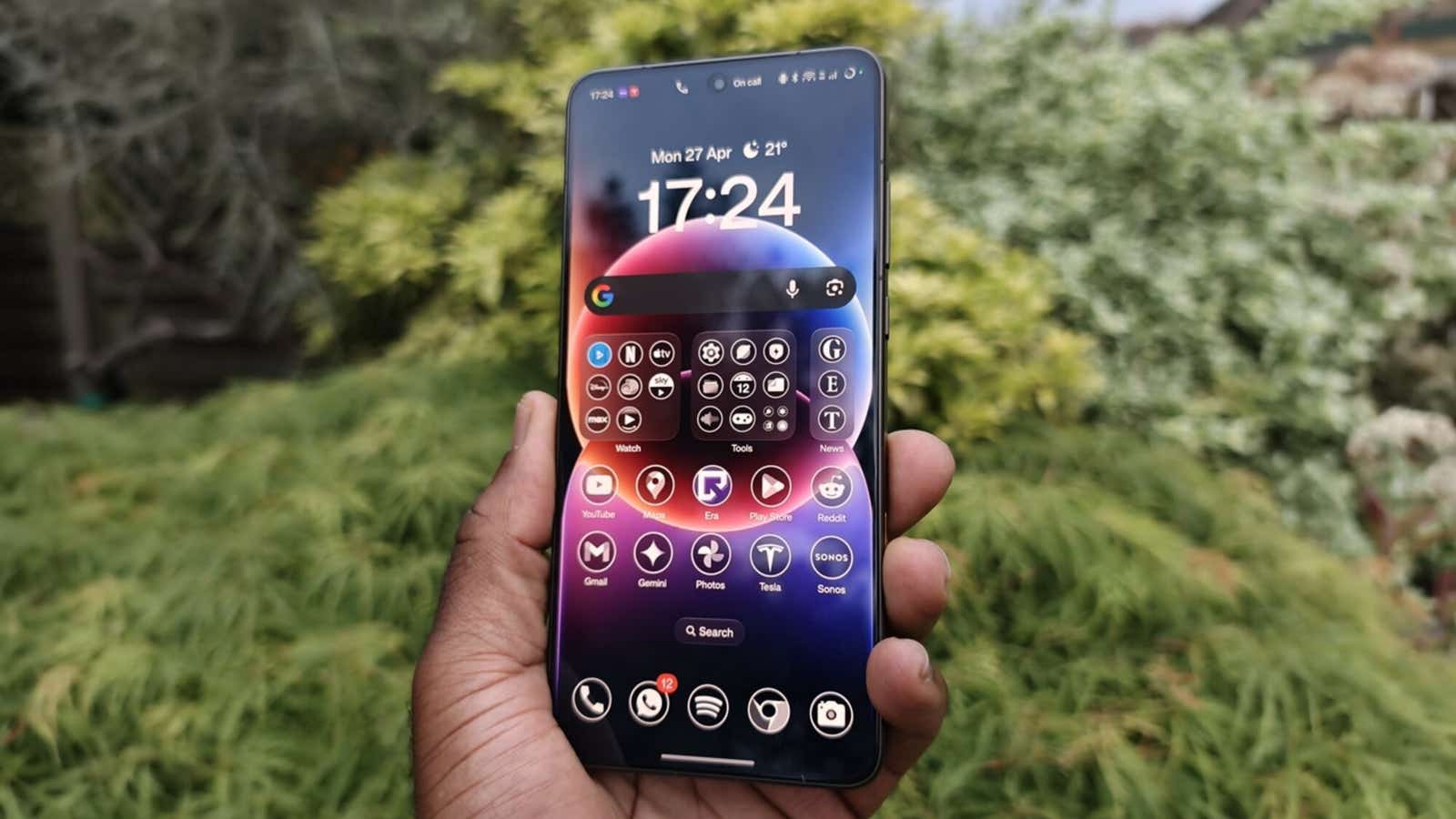
The device runs Android 16 skinned with ColorOS 16 - this interface introduces a genuinely smarter and smoother experience through features like Seamless Animation, connecting every interaction instantaneously.
New productivity tools include AI Mind Space, allowing you to capture and organise on-screen content instantly just by pressing the physical Snap Key.
The AI Mind Pilot acts as a versatile assistant, intelligently coordinating multiple AI models, including Google Gemini, Perplexity, and DeepSeek to handle complex queries and deliver brilliant, context-aware responses - realising each has its own strengths and weaknesses, a more accurate reflection of how many use LLMs daily.

Furthermore, Live Space neatly collapses active notifications into a single minimalist capsule on the lock screen to preserve the aesthetics of your chosen wallpaper.
Connectivity is absolutely top-tier, featuring Wi-Fi 7, Bluetooth 6.0, Dual SIM, and NFC. Through the O+ Connect app, an all-new Quick Share feature enables seamless native file transfers to iOS and iPadOS devices without requiring any clunky third-party applications.
Quick Share support for Apple devices represents a massive and very welcome step forward for cross-ecosystem connectivity, with the ability to even remotely control a Mac or PC directly from the mobile device if you find yourself in a pinch.
In terms of longevity, Oppo has committed to providing five years of major Android OS upgrades and six years of regular security patches for the Find X9 Ultra.
Given the device launches with Android 16 and ColorOS 16 out of the box, this guarantees core system updates all the way through to Android 21. While this window falls slightly short of the seven years promised by Samsung for the Galaxy S26 Ultra, it remains a highly robust policy, ensuring safety and security support for a decent lifespan.

Battery life and charging
Stamina is simply exceptional in the Find X9 Pro thanks to the 7050mAh third-generation silicon-carbon battery, marking a near 1000mAh increase over last year's model.
This is smaller than the 7500mAh effort found in the X9 Pro however, an understandable concession given the internal space required for the complex periscope lens assembly.
Put into stablemate context, it does provide significantly longer usage times compared to the ~5000mAh batteries of both the iPhone 17 Pro Max and Galaxy S26 Ultra - real-world experience of travelling, commuting and gaming found it lasting a solid two days, down to a day and a half when adding in some concerted photo snapping into the mix.
Battery health is also designed for the long haul where combined with smart charging algorithms, Oppo pledges this device can impressively maintain over 80 per cent of its original capacity even after five years of regular use.
Charging is also rapid, provided users have the kit to support it, featuring 100W SUPERVOOC wired and 50W AIRVOOC wireless options alongside handy reverse charging support.
These lightning-fast charging speeds comfortably outpace all competition outside of other Chinese manufacturers, continuing to blaze a trail thanks to incorporating the latest silicon-carbon battery tech - so kudos to the Oppo Find X9 Ultra for being as practical as it is novel.

Oppo Find X9 Ultra UK pricing and availability
The Oppo Find X9 Ultra will hit retail shelves in the UK starting 8 May 2026, priced at £1,449 for a sole 12GB + 512GB variant - a substantial financial investment, and even steeper than some of the current pricing of rival top-tier flagships.
If you are eager to get your hands on one, pre-orders open on 28th April for those who register for exclusive early access. Oppo is offering some seriously tempting launch bundles to sweeten the deal.
Early buyers from the official Oppo Store can choose between a pair of pack-in bundles, which include either the brilliant Hasselblad Earth Explorer camera kit worth an impressive £499, or a suite of Oppo ecosystem products - a 100W SUPERVOOC Power Adapter, Enco Air5 Pro Earbuds and the Oppo Watch X3, all valued at £440.
On top of that, there is the chance to win an Oppo Pad5 or secure one of just twenty spots at an exclusive photography masterclass in London.
With these generous extras, the initial outlay starts to look like meaningful value for serious photography enthusiasts and professionals looking for a genuine camera replacement alike - but as ever, availability will be limited, so getting a pre-order in quickly is the smartest route.

Final verdict
The Oppo Find X9 Ultra firmly claims its position as a top-tier contender in the wildly competitive flagship smartphone market - proving that the 'ultra' monicker can be much more than a branding statement by driving boundary-breaking imaging innovation.
With a best-in-class custom camera array, monumental battery life, and considered premium design accents, the Find X9 Ultra delivers a professional experience that elegantly bridges the gap between a mobile device and a dedicated professional snapper, with the Hasselblad relationship embedded to the core over mere collaboration.
Whilst both its weight and initial outlay are undeniably substantial, the combination of brilliant performance, unmatched optical zoom capabilities and pro-grade videography features make the Find X9 Ultra a truly superb choice for anyone seeking the absolute best in smartphone technology right now.
