Plug-in solar panels explained

What are plug-in solar panels?
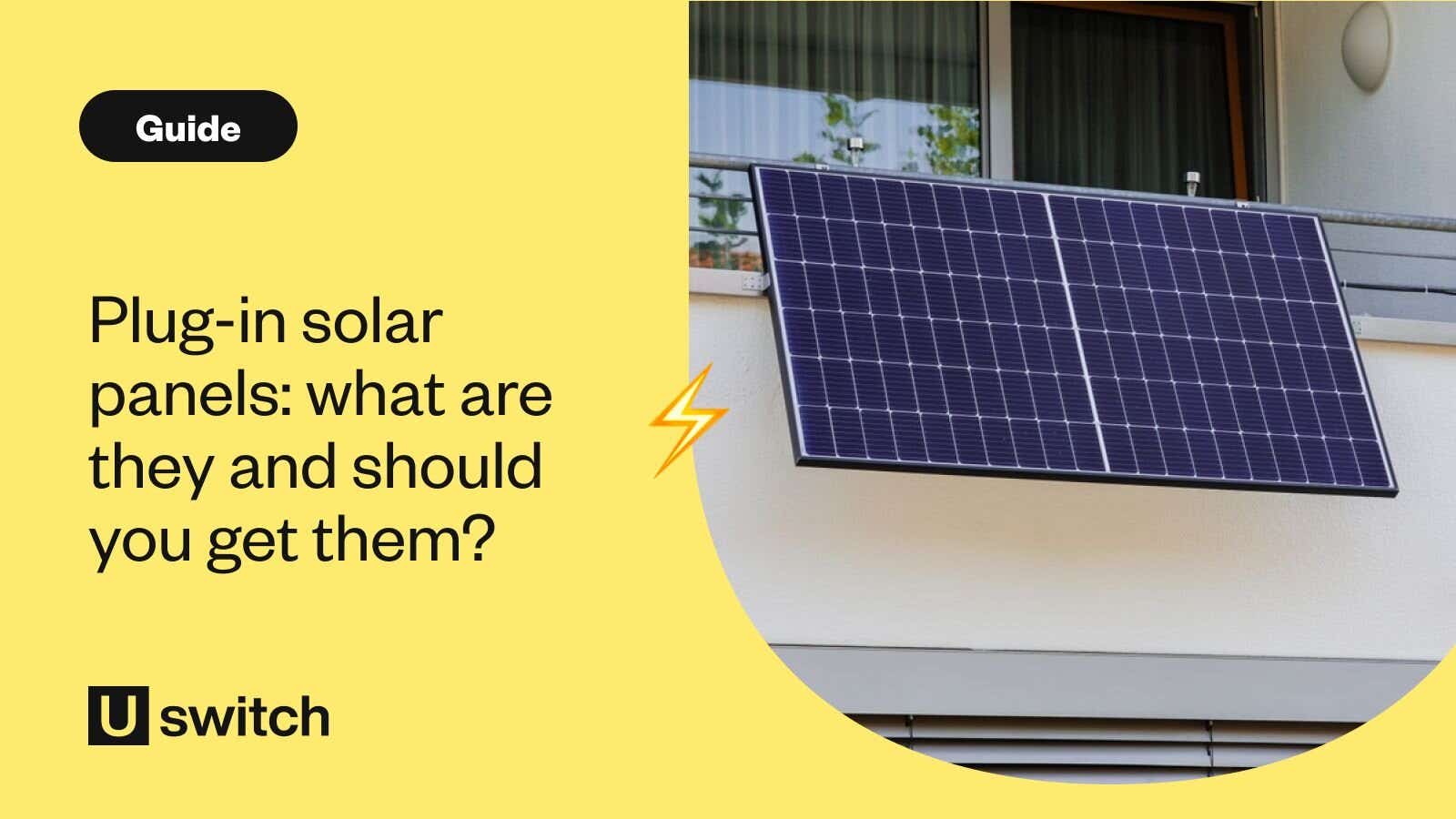
Plug-in solar panels are low-cost, portable solar panels that can be set up in outdoor spaces (including balconies for those who live in flats). They plug directly into mains electricity, so occupiers can generate their own electricity without the need to install a more expensive full solar panel system on a roof. This makes them a good option for people who rent their homes because they can be taken with you when you move.
Can I get plug-in solar panels?
Yes - they became legal to use in the UK on 27 August 2026. You can buy them from retailers like Argos and they're likely to appear in the likes of Curry's, B&Q and Asda, allowing households to more easily access cheaper energy bills.
How do plug-in solar panels work?
Plug-in solar panels work the same way as larger solar panel systems. Because they’re smaller, though, they’ll produce less power.
- Sunlight hits the panel, which generates DC (direct current) electricity.
- The electricity is converted into AC (alternating current, which is the current that homes use) via a micro-inverter, which is usually attached to the back of the solar panel(s).
- The free AC electricity flows through your home’s system, meaning you draw less electricity from the grid that you have to pay for.
How to install plug-in solar panels
One of the advantages of plug-in solar is that you don’t need to engage an installer or endure any disruption to your home. You can set up these smaller panels yourself without the need for any outside help.
- Mount the panel on a balcony or a wall.
- Plug it into an approved indoor or outdoor socket.
There may be an extra step involving connecting the micro-inverter, but the entire process shouldn’t take long.
Other things to consider include:
- The size of the panels - will they fit in the space you have?
- The state of your electrical system - if your wiring and other parts of your system are older, it might be worth having them professionally checked to ensure they don't pose any hazards.
How much do plug-in solar panels cost?
Costs for plug-in solar panels vary, but the ones on sale at Argos range between £599 and £1,199.
Their size - plus the fact that they don’t need special installation - does mean they should cost significantly less than larger roof-mounted systems. Given the government’s aim of ensuring this technology is accessible to as many people as possible, it will be keen that the costs aren’t prohibitive for those interested.
Who should get plug-in solar panels?
You should strongly consider plug-in solar panels if you:
- Rent your home
- Live in a smaller home (such as a flat)
- Are unable to afford the installation costs of a full solar panel roof system.
Plug-in solar panels solve those issues. They’re much cheaper, and all you need is south-facing outdoor space (e.g. a balcony if you live in a flat) to get the most out of them. Additionally, they can be packed up and moved, so if you’re a renter, you can move them from home to home.
How much can I save with plug-in solar panels?
The Department of Energy Security and Net Zero says plug-in solar could save around £70 to £110 per year on energy bills. It’s difficult to say exactly how much you could save because every home’s usage is different. It's unlikely that plug-in solar will completely replace the energy you buy from the grid unless you have extremely low usage. It’s better to expect that your bills will be reduced because of the solar energy you generate.
It’s also important to remember that while the conflict in the Middle East is ongoing, energy prices in the UK are expected to stay high for the rest of the year. Plug-in solar will help protect you from the worst of potential bill spikes.
FAQs
Do I have to ask my landlord to get plug-in solar panels?
There's no clear guidance from the government for tenants, but it's a good idea to double-check with your landlord if you want to get plug-in solar.
Do I need to notify the government that I have plug-in solar panels?
You'll need to let your electricity Distribution Network Operator (DNO) know within 28 days of connecting plug-in solar.
A central registration website will launch when plug-in solar becomes available on 27 August.
When will I break even on plug-in solar panels?
It largely depends on how much energy you use and how much your panels can generate. If you generate more than you use, you'll break even more quickly. If we assume that you save the maximum amount the government estimates (£110) and the panels cost £500, it would take under five years to break even.
