Oppo Find X10 Pro Max Review

Oppo Find X10 Pro Max pros and cons
World-first triple 200MP camera setup, with bespoke Hasselblad tuning.
Exceptionally thin bezels provide an immersive display experience.
Robust durability, up to IP69 certification.
ColorOS 17 is fluid, with elegant visual flourishes and smartly integrated AI features.
Concessions on colour variants and battery capacity versus Chinese variant.
Substantial camera set-up makes the device a little top-heavy.
Pricey, but tempered by launch incentives.
The Oppo Find X10 Pro Max certainly doesn’t play it safe.
Despite arriving just six months after April’s formidable Find X9 Ultra (reviewed here), the Chinese manufacturer has pushed the engineering envelope to deliver a smartphone that abandons any notion of a cautious, mid-cycle upgrade.
The Find X10 Pro Max might have adopted an awfully familiar smartphone naming convention, but represents a significant step forward in mobile technology from Oppo thanks to unprecedented optics, truly striking structural enhancements, and a supremely slick upgraded operating system tying it all together.
Bringing such a device to the European market does however arrive with some unique logistical decisions and regional variances.
Let’s get into everything with our Oppo Find X10 Pro Max review, especially how it stacks up to some of the fiercest competition in years.

Design and specifications
Removing the Oppo Find X10 Pro Max from its packaging reveals a device of exacting craftsmanship.
Machined from a solid block of aluminium, the tailored architectural blueprint of the Find X series is entirely on display, resulting in a smartphone of considered proportions.
The commanding physical presence of the device is undeniable, measuring 161.3mm by 76.6mm, and a hefty 8.4mm thick.
Weighing 226g for the Luna White model and 228g for the Titanium Grey, it is a large phone without feeling bulky. The only really noticeable aspect of its weight is it being slightly top-heavy during prolonged one-handed use, although there is a very good optical reason for this.
Ergonomically, Oppo has made smart choices to accommodate the large chassis. The power and volume rockers are ideally positioned on the right edge, resting exactly where your thumb or index finger naturally falls to ensure effortless reach.
Further enhancing the tactile immersion is the continued presence of a customisable Snap key.
By default, this dedicated button instantly launches the camera and acts as a physical shutter, but it can be easily remapped in the settings to trigger your favourite applications or system shortcuts.

For the European and UK markets, Oppo has streamlined the models available, sticking to a single 12GB of RAM with 512GB of storage variant. The retail package is also bereft of the increasingly endangered bundled charger, which remains available in China but is missing here.
The company is offering the device in a pair of distinct colour variants: Luna White and a sophisticated Titanium Grey.
The differences are more than merely cosmetic. The Luna White hue offers a clean, pearlescent finish, carving out a metallic sliver against the textured rear to proclaim the continued Oppo and Hasselblad partnership. The logos are oriented horizontally, underlining the Scandinavian camera maker’s imaging credentials alongside its own.
Shrugging off smudges with ease, the white model also features gorgeous textured accents with a bevelled surround for the camera array accompanied by a distinctive orange strip, once again a calling card of the storied Swedish manufacturer.
The aluminium frame on the Luna White model is polished to a glossy sheen, providing a bold look that keeps things classy for a top-tier flagship.
The Titanium Grey model, however, is both the one we were lucky enough to review and where Oppo's industrial styling is the most apparent, with the frame and body bleeding together in a seamlessly unified finish.
Understated and featuring a frosted glass rear that reacts playfully under ambient light, the soft matte colourway is elegant, with Hasselblad branding pared back to a single letter amongst the camera fixture.

One of the biggest physical differences between the two comes in the form of a striking translucent unit underpinning the upper portion of the grey Find X10 Pro Max, giving a subtle glow and drawing the eye up towards its imposing set of lenses.
This distinctive two-tone touch gives a futuristic bent to an otherwise ultra-minimalist look, but we can’t help but be drawn to the cleaner lines and luxurious nature of the Luna White version.
There is also a peach-coloured version of the X10 Pro Max, which blends the low-key profile of the grey model with a splash of bold colour, but much like the charger, it is limited to Chinese shores.
That rear camera housing is an unavoidable focal point of the construction. Housed within a sprawling circular island on the upper-left, sensors are arranged symmetrically.
The camera bump is prominent, meaning the phone is at an angle when laid down. Fortunately, the decision for the unit to span more than half the width of the rear means the Find X10 Pro Max remains steady, avoiding the tell-tale table wobble found on some competing handsets.

The sheer physical footprint of its internal components makes this an unavoidable facet of the Find X10 Pro Max’s design, contributing significantly to the device's overall weight and creating that slightly top-heavy feel during extended portrait-orientation use. With internals like this, it is a small price to pay.
In terms of durability, the Find X10 Pro Max is thankfully more than ready to be a reliable companion in the harshest of conditions. An ironclad IP69 rating for water and dust resistance means protection against high-pressure, high-temperature water jets and prolonged submersion, offering total peace of mind.
The screen also comes equipped with a protector already on the display, meaning scuffs and scratches are less of a worry out of the box, although it attracts its fair share of dust with daily use.
Beyond its physical form factor, the Find X10 Pro Max is a robust communicator featuring Wi-Fi 7, Bluetooth 6.2, and comprehensive 5G roaming. European models fully embrace eSIM technology, supporting digital profiles alongside a physical nano-SIM, paired with ultra-wideband (UWB) support and ColorOS 17's dual-encryption for secure data syncing.
Ultimately, Oppo has crafted an impeccably built device that confidently justifies its physical footprint through sheer engineering prowess, leaving a positive initial impression.
Display and audio
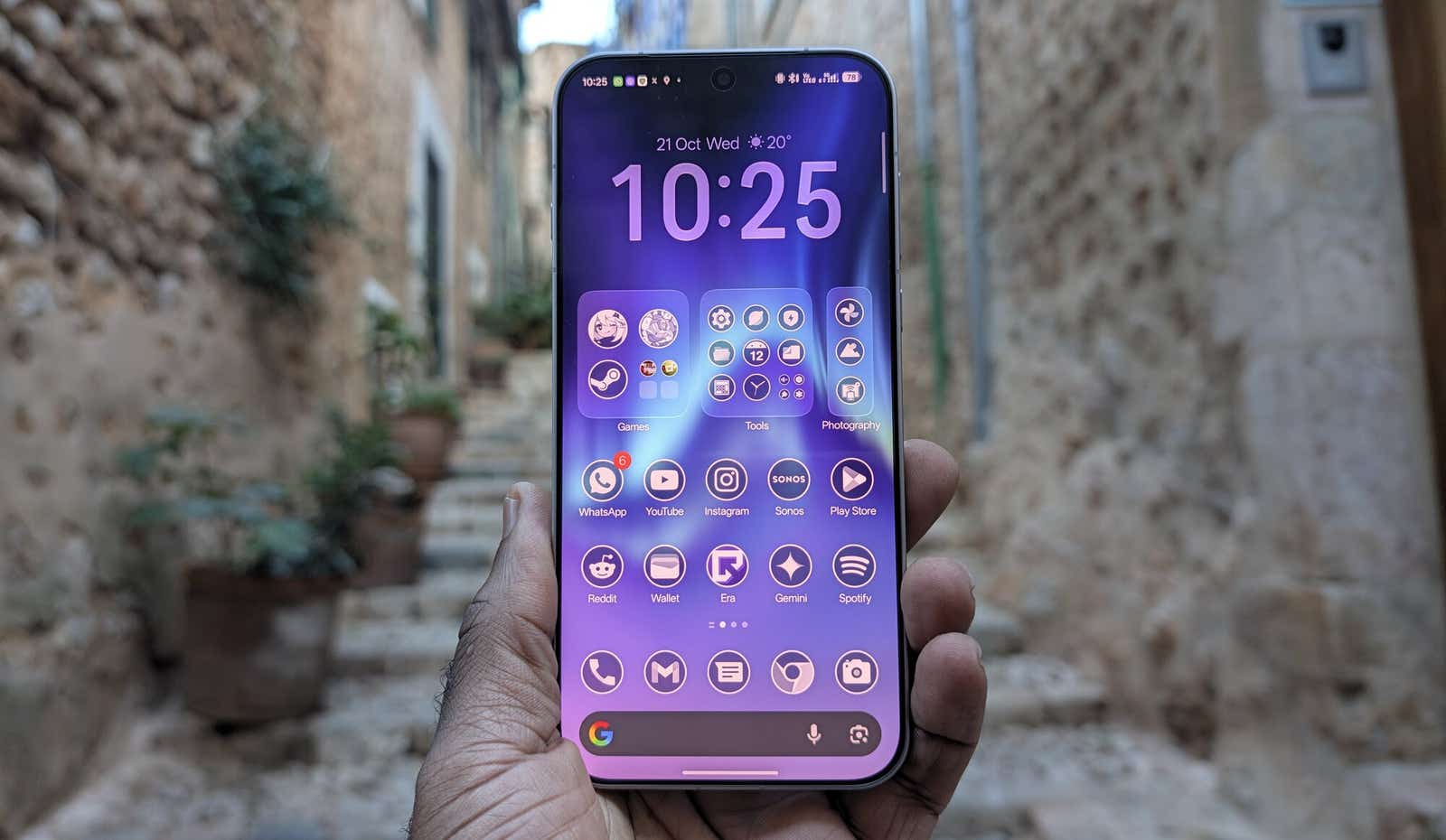
The device continues to wow upon turning it on, as one is immediately met with a vivid display, surrounded by exceptionally thin bezels.
The screen-to-body ratio is pushed to an extraordinary 95.5%, and with symmetrical bezels on all sides measuring just 1.15mm, the X10 Pro Max’s 6.78-inch display becomes an unbroken window to interact with, save for a small pinhole for its front-facing camera.
The feeling of such an expansive display is spectacular and represents a high watermark for modern industrial design.
The X10 Pro Max’s screen itself is a gorgeous 10-bit LTPO AMOLED flexible panel, and with an FHD+ 2772 x 1272 resolution, pixel density sits at a crispy 450 PPI and ensures tiny text remains sharp and photographs are displayed with lifelike clarity.
Options abound for leveraging the display’s maximum resolution and paring it back to 1080p to maintain battery life, as well as advanced LTPO technology allowing the display to dynamically adjust refresh rate from a static 1Hz for images or the always-on display, all the way up to an ultra-smooth 144Hz in supported scenarios.
The net result is an interface that feels hyper-responsive, whether scrolling through menus, browsing web pages, or playing the latest mobile games.
Brightness is another area where the Find X10 Pro Max easily outshines its peers - no pun intended.
The display can reach 2,000 nits in High Brightness Mode (HBM), meaning that even under midday sunlight, between the pre-applied protector and the device itself, legibility and vibrancy remain up to par.
The panel also handily supports both Dolby Vision and HDR10+, turning the device into a perfect pocket Picturehouse.
Watching high-quality video content either streamed or downloaded is a phenomenal experience, with all the major services supported without issues and those razor-thin bezels melting away to leave viewers fully engrossed.
Oppo maintains sterling support for advanced eye-care features, including high-frequency PWM dimming to eliminate screen flicker at low brightness levels, putting an end to eye strain upon extended sessions or a late-night readathon.

The Find X10 Pro Max sounds as good as it looks, courtesy of a nicely balanced pair of symmetrical speakers at either end of the device.
This stereo set-up creates an expansive soundstage with depth and clarity that soared past expectations.
The bassy synths, heavy drums and staccato guitar riffs of Justice’s new tune ‘Flower In a Hurricane’ from Grand Theft Auto VI’s soundtrack conveyed a wonderfully captivating and layered audio playback even at lower volumes, with SZA and Tame Impala’s lilting vocals never sounding drowned out.
Whether listening to podcasts or playing complex spatial audio tracks, the separation between channels is clearly defined and enjoyable. The X10 Pro Max’s support for all the audio codecs that matter, including LDHC, means that a lack of a headphone jack isn’t an issue when it comes to high-fidelity listening on the device.
A thoroughly rich output for both sound and audio for Oppo’s latest, and without a hint of stuttering or lag that has befallen many a recent review device, even with Spotify’s bandwidth-chomping Lossless settings.
Taken together, the audiovisual delivery is nothing short of superlative. Whether gaming, streaming, or simply navigating the OS, the combination of that nearly borderless screen and resonant stereo audio creates an endlessly engaging multimedia powerhouse.
Camera capabilities

As great as the device is as a flagship phone, the Oppo Find X10 Pro Max is defined by the generational leap in photography it delivers, even over the Find X9 Ultra. While others dabble in lending high-resolution sensors to primary lenses, Oppo has committed entirely to a world-first of 200-megapixel sensors across all three of its rear cameras.
What sounds like a brute-force approach to imaging improvements is capably tempered with sophisticated processing and shrewd design choices, resulting in one of the most potent photographic set-ups ever delivered in a smartphone.
The primary 200-megapixel effort is a wide-angle camera acting as your standard 1x optical focal point (24mm equivalent). It features an ISOCELL HPC sensor, and is bolstered by a fast f/1.5 aperture, an 84-degree field of view, and robust 2-axis Optical Image Stabilisation with autofocus.
Co-developed with one of the best in the business in Samsung, this produces images which are simply magnificent in ideal conditions.
The rationale for delivering this level of near-overwhelming detail captured is to allow for everything to still be possible in the edit, with a richness that means cropping heavily into a standard image is more than feasible without a dip in clarity or quality.
Working in concert with a dedicated 3.2-megapixel rear multi-spectral sensor, with its own f/2.4 aperture and a 95-degree field of view, it feeds precise environmental light data back into the imaging pipeline.
When combined with Oppo's proprietary DeepPix technology, the system also excels when it comes to dynamic range, effortlessly balancing bright skies while retaining subtle shadow detail.


Shots taken both under the grey London skies and in the cloudless nights of Mallorca resulted in equally as arresting images, with Hasselblad more than earning its presence on the Find X10 Pro Max with colour science lending a more natural, cinematic, and accurate tone to images.
It’s an interesting shift, aligning entirely with the current trend of moving away from oversaturated photos and sharpened perfection to a fault, and is best reflected in the lauded Master mode.
Aimed squarely at purists, Master Mode unlocks granular manual controls over ISO, shutter speed, white balance, and focus, alongside signature Hasselblad tuning parameters. It allows enthusiasts to dial in their preferred style with absolute precision before the shutter clicks, bypassing standard smartphone computational processing for a more authentic, analogue feel.


The ultra-wide camera is equally striking, stepping back to a 0.5x optical equivalent (13mm). Boasting a fast f/2.2 aperture, an expansive 124-degree field of view, and a lens with autofocus, this one is for capturing both expansive landscapes and tight architectural interiors with ease, with edge distortion remaining well managed.
Because it shares the same 200-megapixel resolution as the main sensor, there is absolute tonal uniformity when you switch lenses in the viewfinder, enabling users to be fully confident in the results across the board.
Anchoring the optical array is a periscope telephoto lens providing a native 3x optical zoom. Leveraging an f/2.1 aperture and a 34-degree field of view, complete with autofocus and its own dedicated 2-axis OIS, this physical reach works in tandem with the sensor to enable superb hybrid zoom capabilities, maxing out at a remarkable 120x digital zoom, letting you push into distant subjects while retaining usable, detailed images.
Whether you are capturing wildlife, architectural details, or candid portraits from a distance, the 70mm equivalent telephoto lens maintains the 200MP baseline, ensuring zoomed shots remain sharp and vibrant. It also acts as the device's macro lens, offering a notable 10-centimetre minimum focusing distance.
Switching to the front of the device, selfie duties are handled by a highly proficient 50-megapixel sensor with an f/2.0 aperture, certainly no slouch given the wide 100-degree field of view and autofocus-enabled optics deliver well-framed group shots without needing to strain one’s arms.


There’s naturally no shortage of modes and settings to harness this powerful setup, thanks to a comprehensive suite of shooting modes at one’s fingertips.
The rear system covers all the essentials, with standard Portrait and Night modes giving that extra exposure timing, alongside creative tools for panoramic and long exposure shots alike.
Productivity is catered for via Google Lens and Hypertext support as well as a dedicated document Scanner, while purists and creators can make the most of that IP69 rating with Underwater mode, as well the panoramic XPan aspect ratio, Pro Video, Hasselblad Hi-Res, and the aforementioned Master Mode.
There is even a distinct Hasselblad Teleconverter profile explicitly tuned for Oppo's new attachable accessory, which we will detail shortly.
It’s also incredibly forgiving if you’re not an aspiring David Bailey. AI comes to the rescue via composition recommendations (above) - a Google Lens-style overlay coaxed with a single tap. It suggests exactly where to point and shoot, complete with a helpful, if sometimes quirky, description of why the framing works.
It’s a great way to introduce users to what can be quite complicated nature of snapping a great photo, allowing users of all skill levels to bring to bear the X10 Pro Max’s elite camera credentials.


To truly bridge the gap between smartphone photography and professional equipment, the Find X10 Pro Max is complemented by an optional Hasselblad Teleconverter Kit.
This ambitious, mountable accessory has been available for prior devices, but fundamentally transforms the photographic potential of the X10 Pro Max by providing genuine, physical optical extension through its sizeable lens.
Attaching the 3.28x teleconverter unit is a relatively painless affair, with a combination of a dedicated case, an attachment tool and the lens itself, effectively pushes the native periscope lens to a 230mm equivalent focal length, delivering true 10x optical zoom and authentic, DSLR-like background compression.
Because you are shooting through physical glass rather than relying on computational algorithms, portraiture and macro photography are utterly free of the artificial edge-detection artefacts that plague typical software-driven portrait modes, the only challenge is popping it on and off quickly enough to capture the ideal moment.
Brilliantly, Oppo has ensured that this high-end accessory truly feels like a tailor-made extension of the phone itself, with the kit designed to match.
As the Titanium Grey model relies on a translucent frame layer and frosted glass, while the Luna White model boasts a polished aluminium chassis and pearlescent rear, the accompanying lens mounting plates and protective cases are designed to specifically cater to those distinct hardware profiles.
The teleconverter barrel itself features a fascinatingly grippy, matte-like texture without any visible knurling, accented by signature Hasselblad Orange accents across the unit’s buttons and handholds.
Furthermore, Oppo has solved the traditional clunkiness of mobile lens attachments by overhauling the kit's portability.
The setup includes a custom-designed carrying pouch and a quick-release shoulder strap that attaches directly to the mounting case, allowing the option to wear the device like a traditional point-and-shoot camera.
When you are finished shooting, the lens-attachment plate can be easily removed, leaving a slim, daily-carry case that effortlessly slides into a pocket or the new custom-made accessory bag, complete with orange mesh inside - testament to Oppo’s attention to detail - without adding permanent, unwieldy bulk.


The video functionality on the Oppo Find X10 Pro Max is genuinely professional-grade, transforming the handset into a content creator’s dream. Across all three 200-megapixel sensors, one can shoot video at up to 4K resolution at a smooth 120fps, or bump the resolution to a sharp 8K at 30fps.
For serious creators who want total control over colour grading in post-production, the device supports ACES-certified O-Log2 recording, offering a flat colour profile that preserves an enormous amount of dynamic range.


However, the most significant update to the X10 Pro Max's video arsenal is the introduction of Open Gate Capture. This feature is a transformative addition for content creators who need to publish across multiple social platforms.
Rather than immediately cropping the video feed into a standard 16:9 widescreen format, Open Gate records using a much larger 4:3 area of the image sensor, capturing a resolution of 4096 x 3072 at up to 60fps.
This provides an abundance of extra vertical and horizontal padding around your subject, and basically means the ability to shoot one-to-many and cater to both the landscape aspect ratio of YouTube and the portrait layout of TikTok and Instagram Reels at the same time.
Oppo has even partnered with cinematic superstars Blackmagic Design to ensure Dolby Vision, O-Log2, and Open Gate Capture are all natively supported within a dedicated Blackmagic Camera app, arriving via an update in the coming months.
Crucially for those professional workflows, getting these massive files off the device is handled effortlessly by the inclusion of a USB 3.2 Gen 1 port, ensuring rapid wired data transfers directly to an editing bay or external SSD.


In every sense, this is a milestone achievement for mobile photography. By marrying elite hardware across all focal lengths with genuinely useful modular accessories and pro-grade video tools, Oppo has delivered a comprehensive camera system that will thrill casual snappers and keep up with seasoned creatives alike.
Check out the latest mobile phone deals on Uswitch
Performance and software
At its core, the Oppo Find X10 Pro Max sidesteps the Snapdragon chip found in the Find X9 Ultra to employ the MediaTek Dimensity 9600 Pro processor, working in tandem with Oppo's proprietary Laminar Flow Engine.
Built on a cutting-edge 2nm fabrication process, this chipset leads the next generation of mobile silicon, with performance to match.
Paired with 12GB of fast LPDDR5X RAM in the sole UK configuration, the phone dismantles demanding workflows. Multitasking is frictionless, with the generous memory allowance keeping loads of applications running happily in the background to be brought back in an instant.
Gaming performance is also standout, with the Dimensity 9600 Pro handling graphically intensive titles at maximum settings with thermal headroom to spare.
Our review mainstay of Genshin Impact at custom high overclocked graphics settings ran at 60fps whilst barely heating the X10 Pro Max, with an internal cooling system effectively doing its job through lengthy gaming sessions.
Even the recent port of Little Kitty Big City to mobile screens was a joy, maintaining the anarchic gameplay of tripping up salarymen to steal their sandwiches without a hitch.
However, hardware capability lives and dies by its software, and thankfully the new ColorOS 17 operating system has seen some dramatic improvements to the user interface.
The perennial Android versus iPhone debate often hinges on the perception of Apple's ecosystem feeling inherently smoother. Nevertheless, Oppo has focused on providing a slick, cohesive OS that legitimately challenges iOS's dominance in terms of both overall fluidity and polished interactions.
Crucially, this general sensibility is built atop the solid foundations of Google’s Android 17 software.
Oppo has expertly woven Google’s latest underlying security, privacy, and navigational enhancements into ColorOS, ensuring the system feels familiar and responsive while delivering a distinctive, elegant look.
Powered by the new Luminous Rendering Engine, the software drastically reduces screen-processing load to ensure that animations are agile, which is most apparent in the system's beautiful new look and feel.
The software leans into translucent interface elements and dynamic contour lighting all over the menus, with just one standout example being the redesigned media player.
As a track plays, the dominant colour from the play bar subtly blazes out into the surrounding user interface as it scrubs through the song, a small but appealing touch which we thoroughly enjoyed.
These interface enhancements extend everywhere, from the intricate transitions of the clock which dynamically resizes and blends across views from always-on display to lock screen, and then to its central position on the home screen.
Sliders and buttons resize and bounce in response to touches, marking a nice nod to tactile skeuomorphic designs alongside modern sensibilities, with ColorOS really bringing a harmony of utility and visual flourish.

If there is one minor layout drawback to be found, it involves the optical fingerprint sensor, where the visual target for the scanner sits slightly higher on the display than usual and means the fingerprint icon can occasionally cover or obscure incoming lock screen notifications, requiring a second glance to read your alerts or disappear upon unlocking via facial recognition.
Beyond visual flair, ColorOS 17 is infused with practical, on-device artificial intelligence designed to reduce digital friction.
AI Mind Space returns as a continuous memory hub, allowing the ability to save anything on the X10 Pro Max’s screen - webpages, documents, images, even receipts - quickly summarise them, and extract key information with a single tap of the Snap button, even while other tasks are still being performed in the background.
Expanding on this prominent addition is the Mind Pilot feature - where agentic tasks can be performed via a selection of smart services to lighten cognitive load.
During our testing, the heavily touted integration with fledgling AI outfit Manus did not seem to connect to personal accounts just yet, but the system intelligently switches to ChatGPT as an effective backup, ensuring that all generative requests and complex queries are still handled instantaneously. There’s also a generous portion of bonus free tokens to enable these services to be used a little more freely - for now.
Busy calendars are also streamlined by AI Mind Suggest, which aggregates flight details, calendar meetings, and local weather into a single, readable overview - once given permission to do so.
Equally, all of the Google-powered features of Circle to Search as well as the imaging enhancements from AI one can expect are also present and correct, from sprucing up photos to picking out the perfect shot from a library of images.
Processing muscle is one thing, but it is the graceful execution of ColorOS 17 that truly elevates the day-to-day interactions, with the added reassurance of five years of OS updates, and six years of security - welcome comfort for a flagship of this stature.
Oppo has managed to serve up immense speed enveloped in an interface that feels intuitively smart, secure, and refreshingly vibrant - although it admittedly takes liberal inspiration from the direction that Apple has taken the market in terms of both style and substance with iOS…to great effect!

Battery life and charging
Battery technology is where we see one of the most significant regional variations of the Find X10 Pro Max. In the Chinese market, Oppo has managed to squeeze in a gigantic silicon-carbon battery designed to set new longevity benchmarks of a whopping 8,000mAh.
However, due to various compliance regulations, safety certifications, and logistics, the UK and EU versions of the Find X10 Pro Max are equipped with a smaller 7,150mAh battery - but it’s far more important to focus on what it is than what it isn’t…which is still world-class.
This capacity is still enormous compared to almost every other flagship phone on the market, and when combined with its highly efficient processor, adaptive LTPO display, and intelligent - if somewhat aggressive - background app management, the X10 Pro Max adds up to a phone which capably manages two full days of heavy use.
An early morning drive to the airport with Android Auto navigation, listening to music for an hour at the departure lounge, watching a movie on a short-haul flight, then a full day of activities and shooting photos well into the evening left the Find X10 Pro Max with around 45% of battery when it was time to turn in for the night, which was frankly mind-boggling.
On the rare occasion that charging is necessary, SUPERVOOC 80W wired charging is still incredibly rapid, although Oppo’s operating system continues to be incredibly coy on just how long it will take by refusing to share timings - a feature we found welcome on the latest Pixel devices.
A myriad of customisation features are also found when it comes to battery on Oppo’s latest - a pair of alternatives to the default balanced mode for both power-saving and high performance scenarios, optimised speeds when using official hardware, as well as support for wireless charging at 50W, as well as reverse charging to boost your buddies when their devices inevitably can’t keep up.
Despite missing out on the battery capacity found in overseas variants, the Find X10 Pro Max is here, packing the latest in silicon-carbon powered stamina, and is ready to go the distance with even the most demanding users.
Oppo Find X10 Pro Max UK pricing and availability
The Oppo Find X10 Pro Max commands a price point entirely reflective of its uncompromising specifications - priced at £1,499 for the single 12GB of RAM and 512GB of storage configuration, available in the two colourways of Luna White and Titanium Grey.
To offset this, as ever the Chinese device maker has introduced a bevy of launch incentives on their own Oppo Store - and participating retailers - which makes the device significantly more appealing.
An immediate £100 discount coupon brings the cost down meaningfully for all comers, but the real prize is in the choice of free gifts from the Oppo ecosystem, worth up to £499.
The obvious choice is the Hasselblad Teleconverter Kit, as mentioned above, it truly takes the 10 Pro Max to another level when it comes to photography. Far and away the most valuable pack-in at £499, it’s bound to be in short supply for early adopters.
Next up is an Oppo Pad 5 - a nimble little MediaTek-powered tablet with a pretty 12.1-inch display and 128GB of storage, worth £399.
Finally there’s the chance to snag an Oppo Watch X3 - the Chinese manufacturer’s latest flagship smartwatch, and bursting with health and fitness tracking functionality, worth £329.
So while the initial outlay is material, the sheer value of these promos do soften the blow considerably for those looking to take the leap - taking the Find X10 Pro Max from pricey flagship (especially when compared to pricing overseas) to a compelling gateway to the Oppo ecosystem.

Final verdict
The Oppo Find X10 Pro Max is a masterful showcase of current generation smartphone technology, making an incredible late bid for the best of the year.
With its steadfast refusal to cut corners or make any glaring compromises, it pushes the boundaries of what is possible on a mobile device, all the while justifying why Oppo's blisteringly quick bi-annual flagship release cycle keeps them at the absolute forefront of the industry.
The triple 200-megapixel camera setup is a step change in content creation, with bespoke Hasselblad colour science that levels up every shot while the heavyweight 8K Log video capabilities comfortably rival dedicated cameras. The highly responsive ColorOS 17 software, coupled with the choice of deluxe launch incentives, really should put this device firmly on the shortlist for tech enthusiasts.
The concessions to bring it to Blighty are worth noting, but the exclusive Luna White and Titanium Grey colours are sophisticated whilst still being minded to move units, and the battery still provides class-leading endurance that leaves most mainstream competitors trailing far behind.
Add in the gorgeous display with its exceptionally thin bezels, blazing connectivity options, and the peerless performance of the Dimensity 9600 Pro processor, and you are left with a well-rounded device that finds itself in a commanding position of the premium segment - Oppo’s Find X10 Pro Max is without a doubt one of our favourite smartphones this year, and we heartily recommend taking a closer look at.
