Compare conveyancing solicitors
Get access to a trusted network of accredited conveyancers to make buying or selling a home stress and worry-free.
Our partner Movemnt can find the best conveyancer for you.
Key points about conveyancing
Conveyancing is the legal work involved in buying or selling a property. You can appoint a licensed conveyancer or a solicitor who specialises in property law.
It usually takes several weeks to a few months, depending on the property and the chain.
Prices vary, so compare quotes and check reviews before choosing. Our partner Movemnt lets you compare an accredited panel with no hidden costs.
How to compare conveyancers and solicitors with Uswitch and Movemnt
Add your property details
Provide a few basic details on the property you’re looking to buy or sell (or both). This will only take 2 minutes.
Compare quotes from a trusted panel
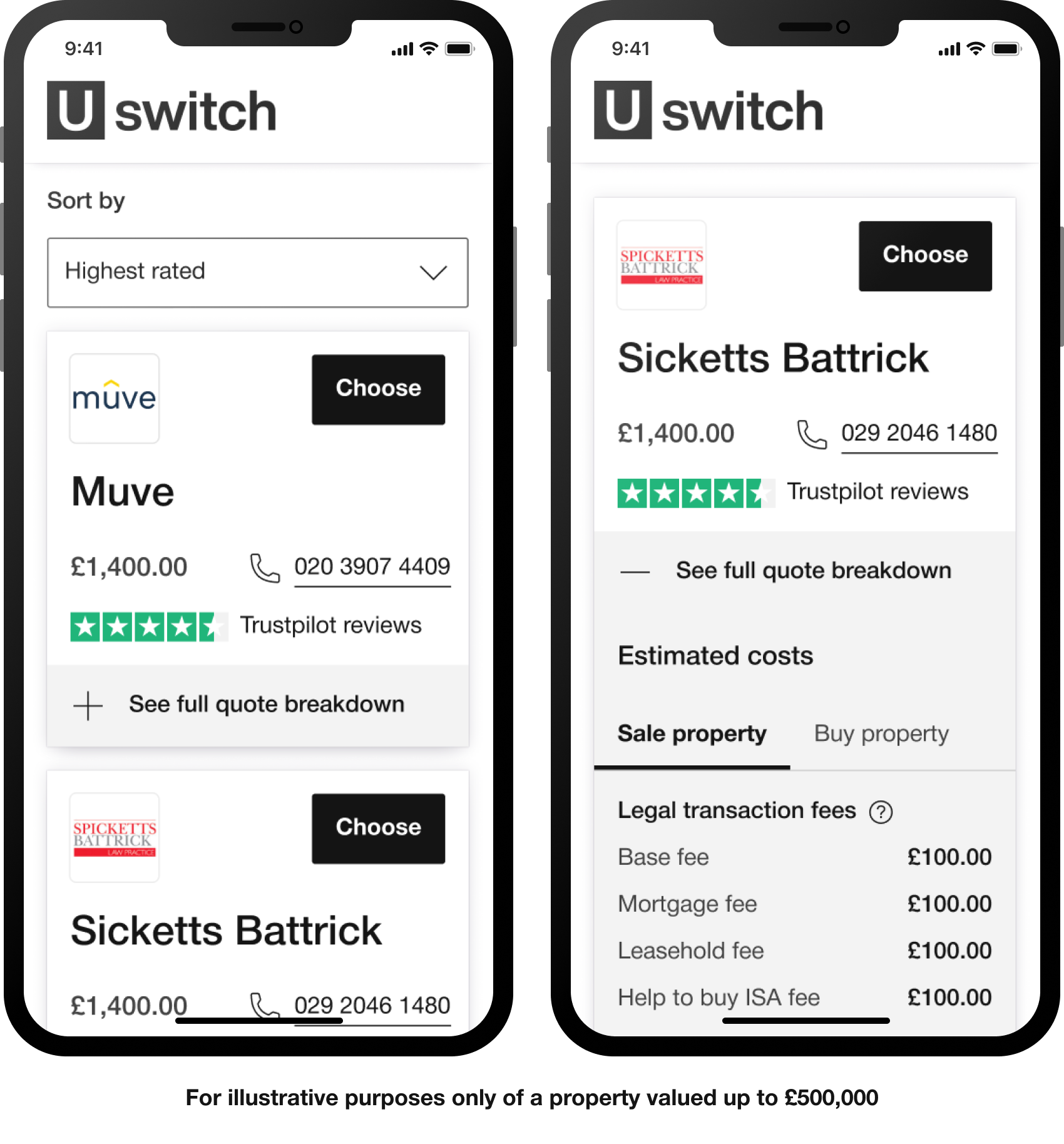
Instantly get quotes from a reliable conveyancing panel with no hidden costs.
Choose a solicitor
Connect with a certified conveyancer for a stress-free home buying or selling experience.
The conveyancing process, step by step
When you instruct a conveyancer, they draw up a letter of engagement setting out their fees plus the upfront money they need for disbursements (the fees they pay to third parties on your behalf, such as searches and Land Registry fees). They also tell the seller's solicitor they're acting for you. From there:
1. Draft contract
The seller's solicitor prepares a draft contract covering the conditions of sale: what's included in the price (carpets, fixtures and fittings), boundaries and rights of way, along with the title deeds. Your conveyancer reviews it with you and raises any issues.
2. Searches and surveys
Your conveyancer arranges searches to check for anything that could affect the property:
Local authority searches: conservation areas, tree protection orders, planned roads or planning decisions
Environmental search: contaminated land, ground stability, flood risk, radon
Water and drainage searches: water supply and sewer connections
Chancel search: whether you could be liable for parish church repairs
You may also want your own survey or homebuyer report to flag structural problems or major repairs.
3. Mortgage offer
Your mortgage lender arranges a valuation to confirm the property is suitable security for the loan. When your formal mortgage offer arrives, your conveyancer checks the terms with you and asks you to sign the mortgage deed, which is held until completion.
4. Signing and exchanging contracts
Once you and your conveyancer are happy with the information and searches, contracts are exchanged. At this point you and the seller are legally committed and cannot pull out without penalty. You pay your deposit and sign the Transfer Deed (the TR1 form). Buildings insurance must start from the day you exchange, because you become financially liable for the property then. The solicitors agree a completion date.
5. Completion
On completion day your conveyancer sends the mortgage funds to the seller, the keys are handed over and you can move in.
6. Post-completion
You'll pays any Stamp Duty owed through the conveyancer, who will also register you as the owner with the Land Registry.
How much does conveyancing cost?
You can expect to pay anything from around £800 to £1,500 upwards. That covers your conveyancer's legal fees plus disbursements, the third-party costs they pay on your behalf, such as:
Local searches
Title deeds
The Land Registry fee
Costs can be higher in London or for more complex transactions.
What could increase the cost of my conveyancing?
Leasehold property, which needs extra work to confirm the terms of the lease
Help to Buy ISA, Lifetime ISA or shared ownership, which all need more than the standard legal work
A new-build home, which involves more work and higher costs
Complex transactions, such as unregistered land, gifted deposits or indemnity policies
All of these should be itemised in your conveyancer's quote.
Why do I need a conveyancing solicitor?
You're getting a property law expert
Conveyancers and solicitors who specialise in conveyancing are experts in a complicated legal area with a complex process. A conveyancer will need to:
Review all legal documents
Manage local authority and environmental searches
Check contracts drawn up by a seller’s conveyancer
Work with your mortgage lender to make sure all the necessary information has been provided
Pay any related fees and register you as the new owner with the Land Registry
You’re covered by their insurance
Legal experts have negligence insurance to protect you if things go wrong, which can happen during a complex home transaction. If you try to handle conveyancing on your own, you might be personally responsible for any errors, leading to unexpected legal expenses.
You save on time and stress
The conveyancing process can be long and complex, but with an experienced solicitor, it becomes hassle-free. An experienced conveyancing solicitor will take on that burden and turn it into a seamless process. They’ll keep you well-informed throughout the buying or selling journey. It’s not worth taking the risk of trying to do it yourself, when any mistakes can cause delays or cost you significant amounts of money.
You won’t worry about difficult discussions
You won't need to contact the other party's solicitor directly. Your solicitor will handle all communication on your behalf. They're experts in asking the right questions, acting in your best interests, and skilfully negotiating for your benefit to ensure a smooth home transaction.

Are conveyancers and solicitors different?
Fundamentally, they both provide a similar service when it comes to buying and selling a property. Conveyancers will specialise in property law, with intricate knowledge of buying and selling properties. A solicitor is a qualified lawyer who might offer a range of legal expertise including, but not limited to, property law. So it’s worth checking their experience specifically with property transactions.
Both are regulated, but by different bodies. Conveyancers are regulated by the Council for Licensed Conveyancers, whereas solicitors are regulated by the Solicitors Regulation Authority. So you have protections whichever you decide to use.
Mortgage lenders can also stipulate they’ll only work with conveyancers with certain accreditations. So be sure to check beforehand.
Due to their range of legal expertise, solicitors can have higher fees but may be able to advise if your sale or purchase has more complexity.
How long does conveyancing take?
The conveyancing process will typically take several weeks when buying a home. It all depends on the complexity of the purchase. For selling a home, it typically takes around 12 to 16 weeks for the legal process to complete. It can take longer if you’re part of a long chain or a complex sale. The Movemnt network of accredited conveyancers will keep you up to date on progress.
How long does conveyancing take?
For a straightforward freehold purchase, conveyancing from offer to completion typically takes around 8 to 10 weeks. A leasehold property is usually 10 to 12 weeks, and a complex move or long chain can take considerably longer.
How long do conveyancing searches take?
Usually about 2 to 3 weeks. If a local authority is backlogged, it can take up to 6 weeks.
Conveyancing is different in Scotland
The Scottish legal system handles property transactions differently than England and Wales, so it’s important to be familiar with it. You can see more about Scotland’s conveyancing process on the Law Society of Scotland’s website.
| Feature | England and Wales | Scotland |
|---|---|---|
| Firm remit | Purely legal work. Estate agents handle viewings and negotiate the offers. | Frequently handles both estate agency marketing and legal work under one roof. |
| Property disclosures | Primarily the buyer's job to pay for and discover property flaws. | The seller is legally required to provide a comprehensive Home Report upfront. |
| Legally binding point | Only at the formal exchange of contracts late in the process. | Much earlier, as soon as a series of formal legal letters (missives) are concluded. |
What can delay my conveyancing?
Property chains require seamless communication between buyers, sellers, multiple solicitors, estate agents, mortgage lenders, and local government officials. A delay from just one person, whether they are slow to sign a document, missing a piece of paperwork, or away on holiday, can stall the entire chain.
What's more, if a survey uncovers an unexpected issue like structural subsidence or damp, the completion date will likely be pushed back while prices or repairs are renegotiated. A proactive, highly communicative solicitor is your best defense against these bottlenecks.
How can I speed up my house conveyancing?
| Scope out communication preferences | Request that your conveyancing firm communicates via email or an online portal instead of post |
| Prep your documents early | Gather your essential paperwork (such as ID, proof of deposit, and bank statements) before they are requested so your mortgage broker or lender can process your application without delays |
| Sign and scan immediately | Return paperwork quickly when you need to sign and return documents |
| Follow up as needed | Confirm receipt of your documents and check in regularly with your solicitor to ensure no queries are left unanswered |