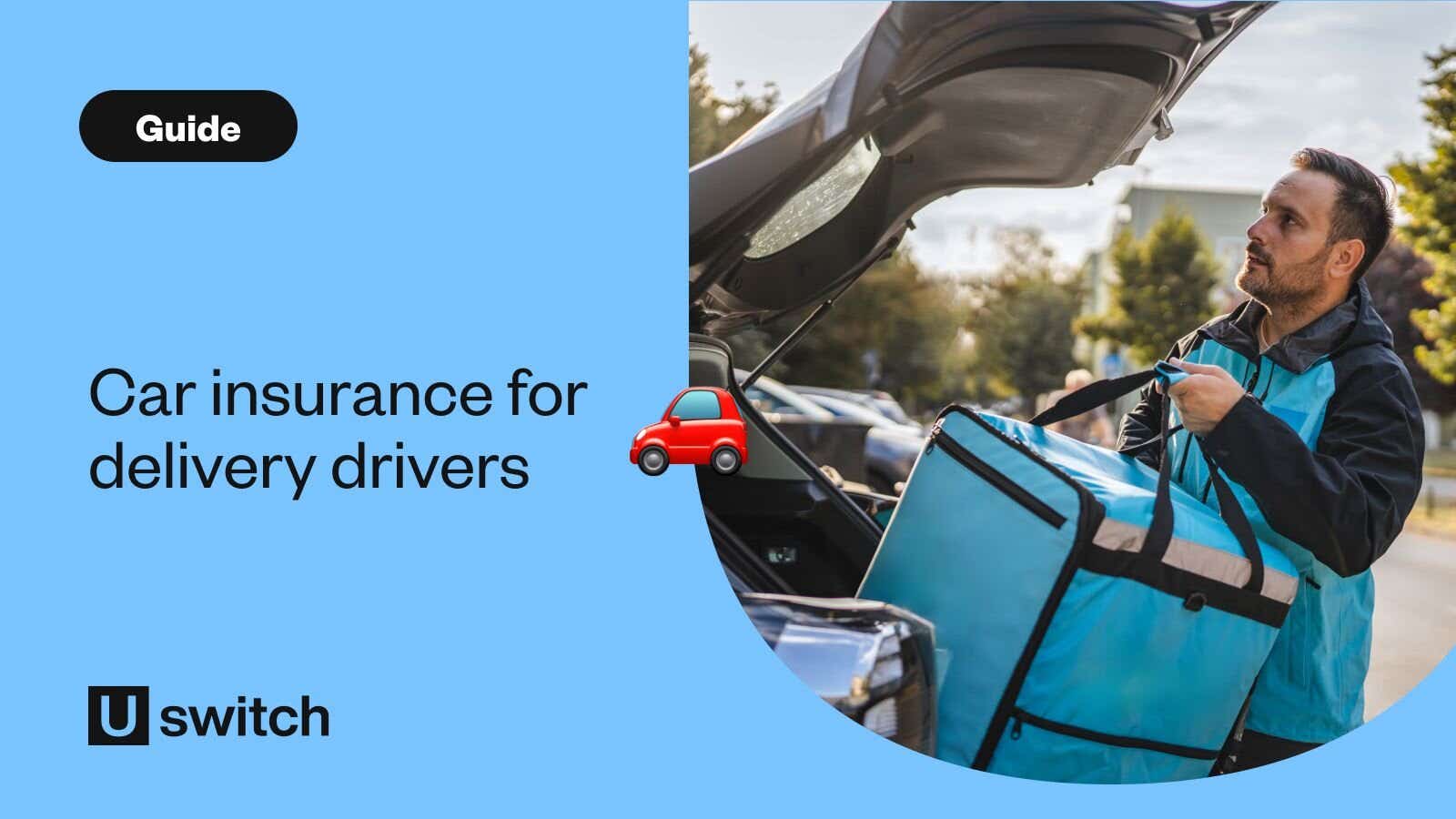
Car insurance for delivery drivers

Key takeaways
- Standard car insurance doesn't cover deliveries - even if your policy includes business use or commuting.
- Hire and reward insurance is a legal requirement for any driver paid to transport goods.
- Pay-as-you-go insurance lets part-time drivers activate cover only when they're working.
- The cost of delivery driver insurance varies based on factors including your age, vehicle, and mileage.
What is delivery driver insurance?
Delivery driver insurance is a specialised commercial policy for people who are paid to transport items such as hot food, parcels, or groceries.
In the insurance industry, this is known as hire and reward cover. Unlike standard car or van insurance, it is designed specifically for courier work, where drivers spend long periods on the road, operate in heavy traffic, and make frequent stops.
It's worth remembering that hire and reward cover works alongside, rather than replacing, your standard car insurance policy.
Do I need hire and reward insurance?
If you're getting paid to transport goods, you're legally required to have hire and reward insurance.
This rule applies across the board, whether you are working for major platforms like Deliveroo, Uber Eats, Just Eat, Amazon Flex, and Evri, or driving for a local independent business.
It is a common misconception that standard car insurance covers this. Even if your current car insurance policy includes "business use" or "commuting", it will not protect you while making deliveries. Driving without the correct commercial cover means you are effectively uninsured, which can lead to hefty fines, penalty points on your licence, and immediate removal from delivery apps.
What's the difference between business use and delivery insurance?
While they may sound similar, business use and delivery insurance cover very different types of driving.
- Business use: Covers work-related driving that does not involve carrying goods for payment. This includes travelling between workplaces, visiting clients, or attending meetings or training. If you're working as a salesperson who travels around a lot visiting customers, you'll need business use adding to your policy.
- Delivery insurance (hire and reward): Covers drivers who are paid to transport goods such as food, parcels, or other items from one location to another as part of their job. For example, if you're working for a company like Deliveroo, you'll need hire and reward cover.
Can I get pay-as-you-go delivery insurance?
Yes, pay-as-you-go car insurance (often called top-up cover) allows you to buy insurance on an hourly or per-delivery basis, but is a completely different product to hire and reward cover and business use cover.
It works alongside your main car insurance policy and is only active when you log into a delivery app to start a shift. This makes it a flexible option for part-time or gig-economy drivers who don’t need a full annual policy.
Before using it, you’ll need to check your main car insurance policy allows top-up delivery cover, as some policies don’t permit this type of arrangement.
How much does delivery driver insurance cost?
| Type of cover | Average cost |
|---|---|
| Delivery driver | £871* |
*Median annual cost of all types of car insurance for people listing delivery driver as their occupation - Uswitch data March to May 2026.
Delivery driver insurance is generally more expensive than standard car insurance because couriers spend more time on the road, often during busy periods or late at night, which increases the risk of accidents.
Your premium will depend on several key factors, including your age and driving experience, your vehicle’s engine size, your annual mileage, your postcode, and your job title can affect your insurance, with urban areas typically costing more due to higher traffic levels.
If you only work a few hours a week, it’s worth comparing the cost of an annual policy against your expected earnings. In many cases, a pay-as-you-go option can work out more cost-effective for part-time drivers.
What to look out for in a delivery driver policy
When you compare food delivery insurance through Uswitch, you can view specialist policies side by side in one place, making it quicker to find the right cover without going directly to multiple insurers.
A standard car insurance policy will not cover delivery work, so it’s important to make sure your policy is explicitly classed as 'Hire and Reward' or 'Fast Food Delivery' before you buy.
A good policy will have the following key features included as part of your cover:
- Goods in transit cover: protects the items you are carrying if they are damaged during a delivery or accident.
- Public liability insurance: covers you if you accidentally injure someone or cause damage to property while completing a delivery.
- Theft cover: your policy should cover your vehicle for theft, or any damage suffered as a result of your vehicle being stolen.
Get a car insurance quote
See a range of car insurance quotes in just a few minutes when you compare with Uswitch
