
Solar panels are a great way of cutting your electricity bills - find out whether your home is suitable and how solar panels work.
We all want to live self-sustainably, or at least reduce the carbon footprint of our home, and solar panels make that dream possible.
But it's not that simple. Solar panels can be expensive at first, and may not always be suitable. Read on to see if solar panels are right for you and your home.
What are solar panels?
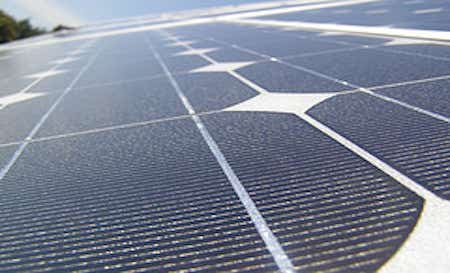
Solar panels are made of photovoltaic (PV) cells, which turn sunlight into electricity. This electricity can then be fed into your home's mains electricity supply.
The technology behind solar is relatively old, despite their futuristic appeal, but while the basics are the same the efficiency of solar panels has improved greatly in recent years.
It’s worth noting that solar panel suppliers often have two types of solar panels on offer: thermal panels and photovoltaic (PV) panels. The former are used only to heat water.
How do solar panels work?
Solar panels are an environmentally friendly way of producing electricity for your home. As mentioned above, the technology relies on photovoltaic (PV) cells to turn sunlight into electricity.
The electricity produced by your solar panels will be used to power any appliances currently in use within your home. Any electricity which is not used will be sent to the grid.
So, in essence, solar panels work by producing extra energy which either gets used by you, or gets sent to the grid. Any electricity you consume which is in excess of what your panels are producing will be sourced from the grid.
Is it sunny enough for solar power to be generated in the UK?
Yes. While its true that the UK isn't exactly bathed in sunshine, solar panels, despite their name, don't need direct sunlight - they also work in cloudy or overcast weather.
Although. cloudy weather diminishes the generating capacity of panels by approximately 50% in comparison to direct sunlight, solar panels in the UK are still a valid means of producing electricity
Is my home suitable for solar panels?
While solar works for a large number of properties in the UK there are still some areas and types of roof that are not suitable. The following questions will help you work out if your home could be suitable for solar panels:
-
Do you own your home?
If you rent your home you can't install solar panels, unless you negotiate this with your landlord. If your property is leasehold, you'll need to get permission from the freeholder.
-
Do you live in a flat?
If you live in a basement or mid-floor flat then solar probably won't be the right solution for you. -
What direction does your roof face?
South-facing roofs tend to be the best, but some schemes accept other roofs.
-
Is your roof in the shade?
Heavily-shaded roofs aren't ideal.
-
How big is your roof?
There are different solutions for different sized roofs, but the more space you have, the better.
-
Do you live in a listed building, or a conservation area?
Regulations can sometimes pose a problem.
Remember, there are exceptions to every rule, so the best way to check if solar is right for you is to get in touch with the company in question. They'll talk you through your options and do a survey if necessary.
Will the quality of my electricity suffer?
No. You won't notice any difference. If the panels aren't producing much electricity, you'll just use electricity from the Grid instead.
Solar panels don't replace the energy you currently use, they simply supplement them with power from a greener source when possible. Conversely, if you generate too much solar power you can sell the energy back to the National Grid at an agreed rate through the Feed-in Tariff scheme.
Do I have to switch the panels on each day?
No. They're always on.
How long do solar panels last for?
Solar panels usually have a 25-year manufacturers' performance guarantee and you should get another 10 to 15 years of use beyond this.
The inverter - the piece of equipment that converts the Direct Current produced by the panels to Alternating Current on which the grid runs - needs replacing after about 12 to 15 years.
Do I need planning permission for solar panels?
You generally don't need planning consent for solar panels. However, if you live in a conservation area or a listed building you should check first. Also, if you're your solar panels would be visible from the roadside of the property you made need to apply for planning permission.
It's best to check with your local council planning officer if you're not sure.
How can I be sure I'm using the free electricity?
You won't notice the difference between using your free electricity and using electricity from the Grid, and you won't even notice the transition. If your panels are correctly installed your system should automatically switch over when stored solar power is available to you.
Can I still switch my gas and electricity supplier?
Yes, you can still switch your gas and electricity supplier if you have solar panels.
You will continue to receive your Feed-in Tariff rate from the same supplier, but your gas and electricity will come from your new supplier.
This is because the Feed-in Tariffs are a form of subsidy that are actually paid for by the energy companies, so whichever firm you're with when you take out the Feed-in Tariffs administers your rate. Your original energy company is referred to as your 'FiT licensee'.
How can I make the most of the free electricity from my solar panels?
To make sure you use as much of the free electricity from your solar panels as possible you need to try and use more electricity during the day, when your panels are producing electricity.
You could try:
Putting the washing machine, tumble dryer and dishwasher on during the day.
Charging mobile phones, laptops and other gadgets during the day and using their battery power at night.
Using an electric slow cooker to cook your food during the day.
Alternatively you may be able to store some of the energy produced by your panels with a little help from your installer. Having an immersion heater connected to your panels for example is a good way to store your energy for when you need it.
How does this work with my existing gas and electricity supplier?
Nothing will change, except that you'll pay less for your bills. You can stay with your existing energy supplier, who will take readings from your meter as normal and bill you as usual.